Injection molding and die casting tools are critical assets in high-volume, high-precision manufacturing. Traditional approaches often face constraints related to thermal performance, lead time, tooling cost, and the lifecycle of complex dies and molds.
AltForm supports mold makers, OEMs, and tooling partners with Powder Bed Fusion, Direct Energy Deposition, advanced laser processes, automation, and software intelligence to overcome these challenges and enable new levels of performance, durability, and flexibility.
Our solutions help streamline design, accelerate delivery, extend service life, and improve thermal behavior. From conformal cooling channels and tailored coatings to laser hardening and efficient remanufacturing workflows, AltForm technologies adapt to the evolving needs of modern tooling operations.
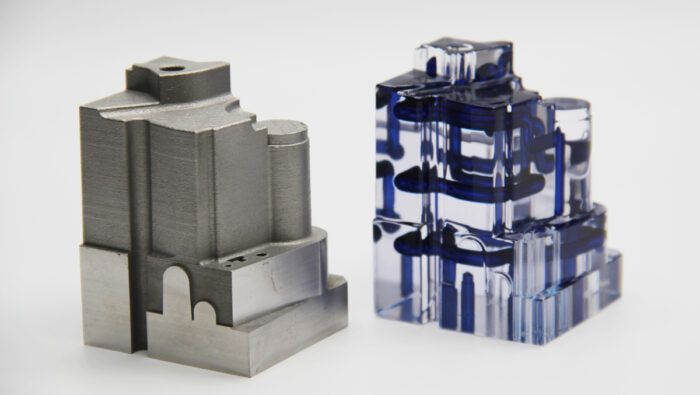
PBF molds with conformal cooling channels
One of the most impactful applications of additive manufacturing in injection molding and die casting is the creation of molds with conformal cooling channels. Unlike straight drilled channels, conformal channels follow the complex contours of the part geometry, providing more uniform cooling and faster cycle times.
With Powder Bed Fusion, designers can create cooling networks that would be impossible to produce with traditional methods. This leads to:
- improved heat dissipation and reduced thermal gradients
- shorter cycle times and higher throughput
- less warpage and improved dimensional consistency
- higher quality finished parts with reduced scrap
AltForm’s Print 300 and Print 400 platforms deliver the precision required for reliable, efficient cooling channel geometries that directly contribute to competitive production metrics.
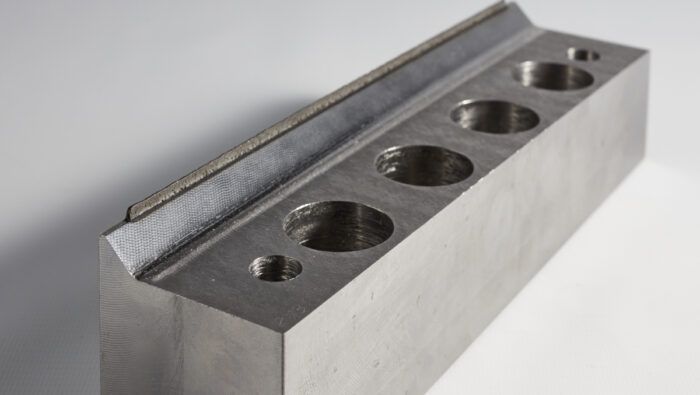
Remanufacturing of large tooling and extended tool life
Large injection molds and die casting tools represent significant investments. When they wear or distort over time, traditional practice often means building new tooling from scratch: a costly and time-consuming process.
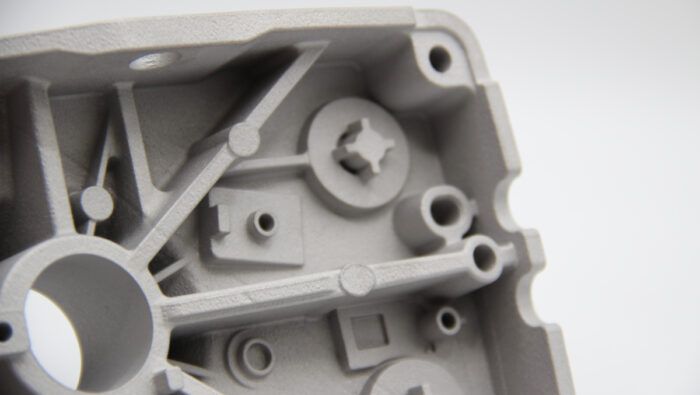
With Direct Energy Deposition and tailored automation, AltForm enables remanufacturing of high-value tooling. Instead of fully replacing a worn die, the worn sections can be rebuilt with new material, restoring geometry and performance.
The benefits of remanufacturing tooling include:
- lower total cost compared to full replacement
- reduced downtime for production lines
- extended service life beyond original specifications
- in many cases, improved performance and durability compared to the original tool
Customers using AltForm remanufacturing workflows often report that rebuilt tools outperform the originals in terms of repeatability and lifecycle stability.
Protective and performance-enhancing coatings
Laser coating or cladding is a proven strategy for improving tool performance by applying hard, wear-resistant, and thermal-stable materials to critical surfaces. In tooling for injection molding and die casting, coatings can:
- increase resistance to abrasion, soldering and corrosion
- reduce maintenance frequency
- improve tool longevity under repetitive thermal cycling
Specialized coatings, such as cobalt, nickel, or ceramic-based alloys, can be applied selectively where needed, preserving the underlying base material while enhancing surface performance.
AltForm’s laser coating solutions are engineered for industrial reliability and can be integrated into automated lines with digital process control.
Laser hardening to improve surface durability
Laser hardening is a surface treatment that increases the hardness and fatigue resistance of tool surfaces without affecting the core material. By rapidly heating and cooling the surface with a high-energy laser, the microstructure transforms, resulting in:
- improved wear resistance
- higher surface hardness
- better fatigue performance
For injection molds and die casting tools, laser hardening can significantly extend service intervals and reduce the likelihood of early failure due to surface wear.
Alternatives for short runs and small batch production
Conventional die casting and injection mold production require expensive tooling and long lead times, which can render small batch production uneconomical. Metal additive manufacturing offers a viable alternative for short runs, prototyping, and customized batches by:
- eliminating the need for hard tooling in early phases
- enabling digital inventories of tool designs
- reducing lead times from weeks/months to days
In many applications, AM tooling reduces total cost for small series while preserving performance, making it an attractive strategy for customized parts, low-volume products, and rapid iteration.
Materials tailored for tooling applications
Tooling environments demand materials that combine mechanical strength, thermal stability, toughness, and wear resistance. AltForm supports a broad range of tooling-grade materials, such as:
- maraging steels for high-strength molds
- tool steels optimized for thermal and wear resistance
- high-temperature alloys for die casting
- copper alloys and aluminum for thermal-optimized inserts
Process control, coupled with automation and advanced monitoring, ensures that material properties remain consistent and reliable across production volumes.
Our solutions for the injection molding and die casting industry
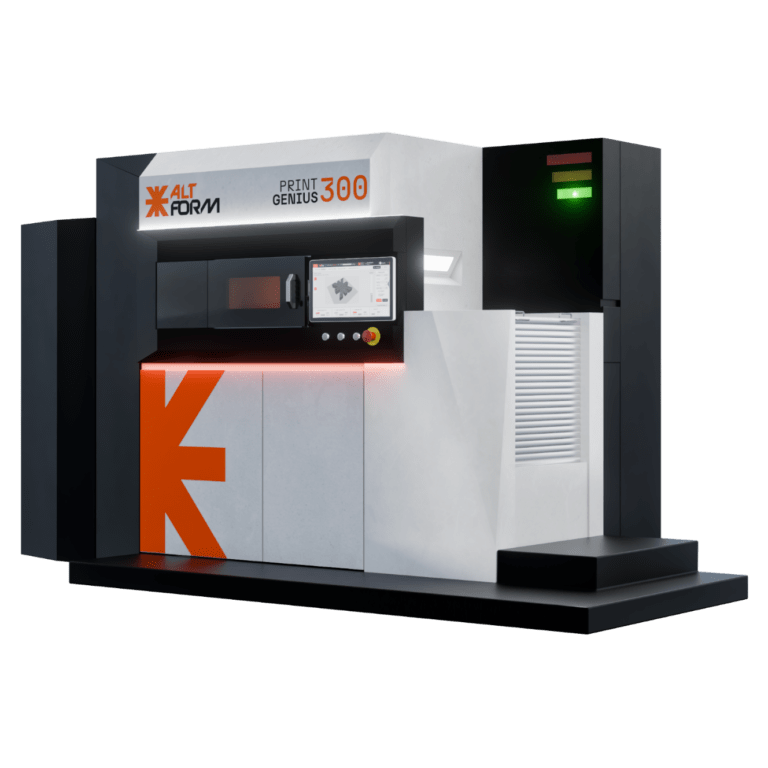
Print 300 Series
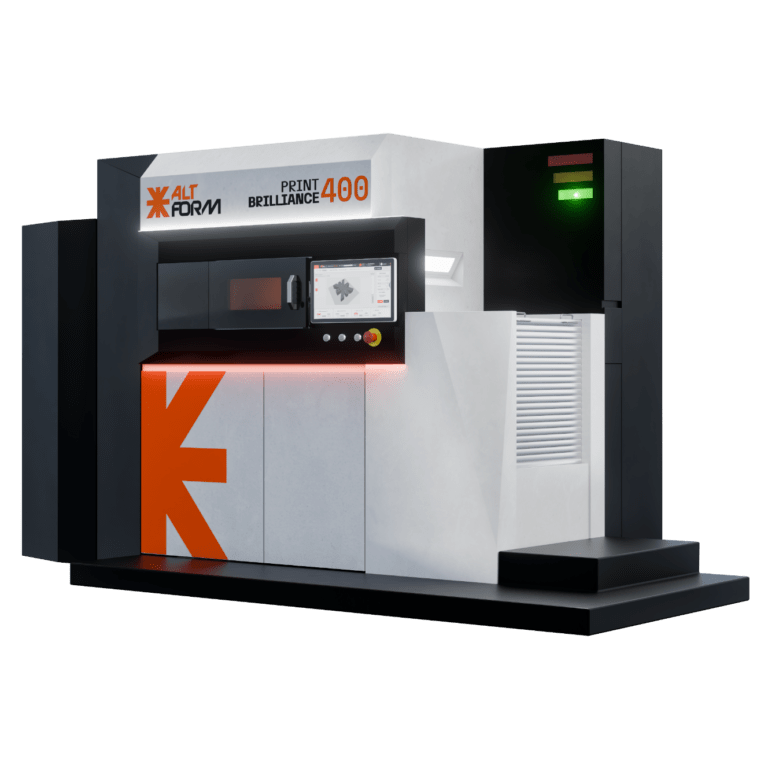
Print 400 Series
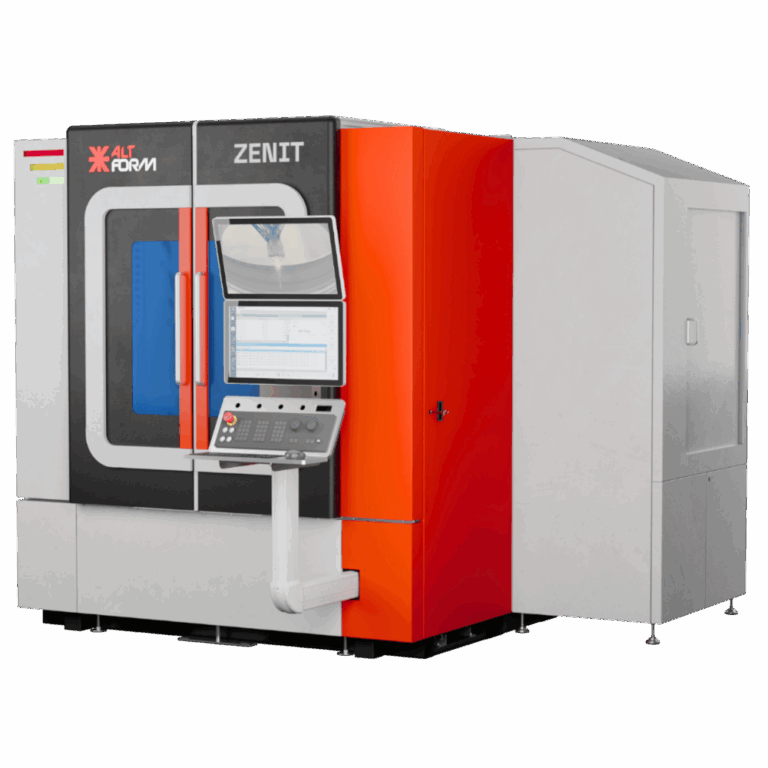
ZENIT Cell