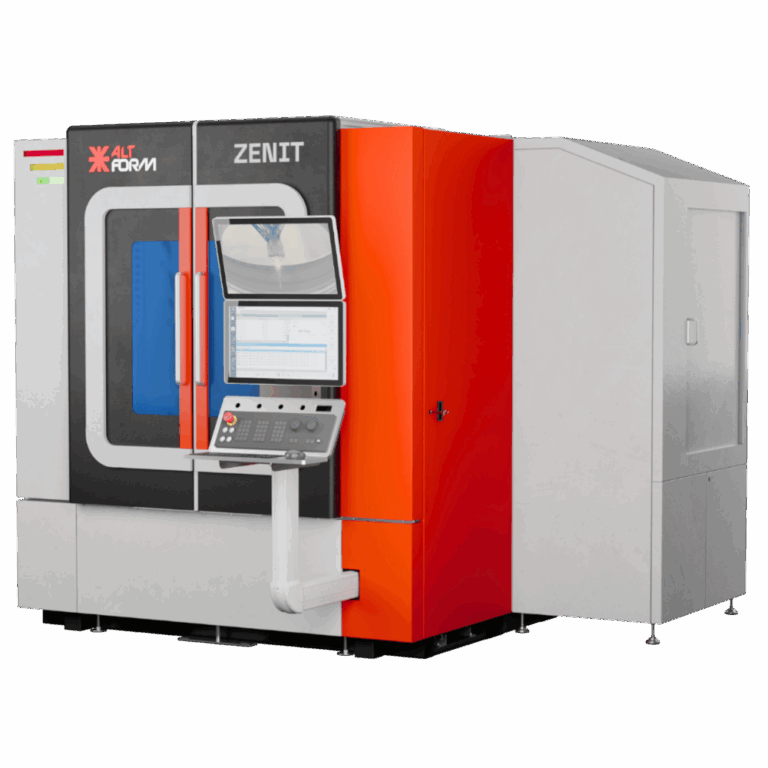
Modern production systems require components that combine precision, reliability, mechanical strength, and repeatability. Traditional manufacturing can struggle to meet these requirements, especially when complex geometries, rapid iteration, or customized tooling are involved.
AltForm supports manufacturers, tooling houses, OEMs, and system integrators with Powder Bed Fusion, Direct Energy Deposition, advanced laser processes, automation, and intelligent production software. Our technologies help redesign, produce, repair, and optimize tooling and machinery parts with measurable improvements in performance.
Additive tooling with optimized geometry and faster development
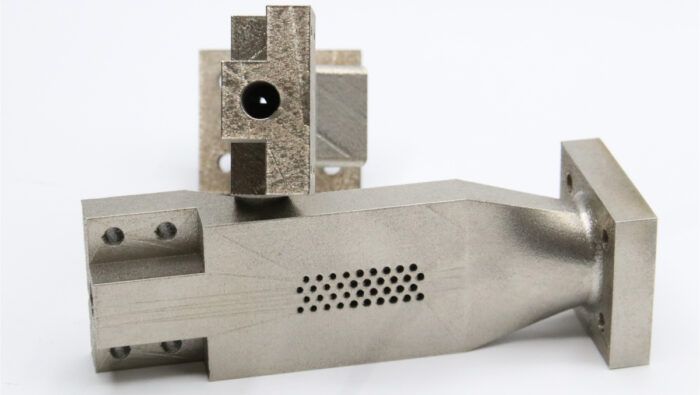
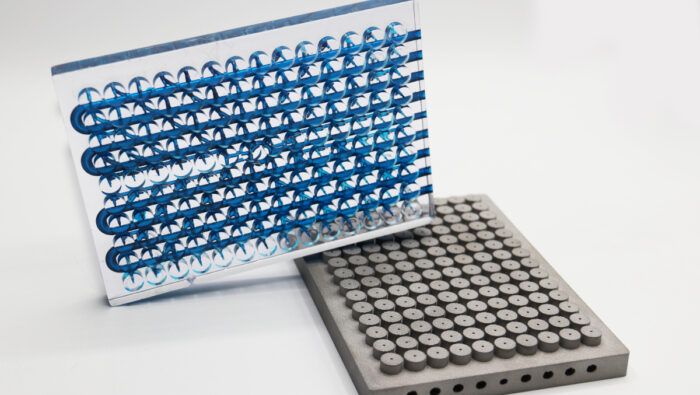
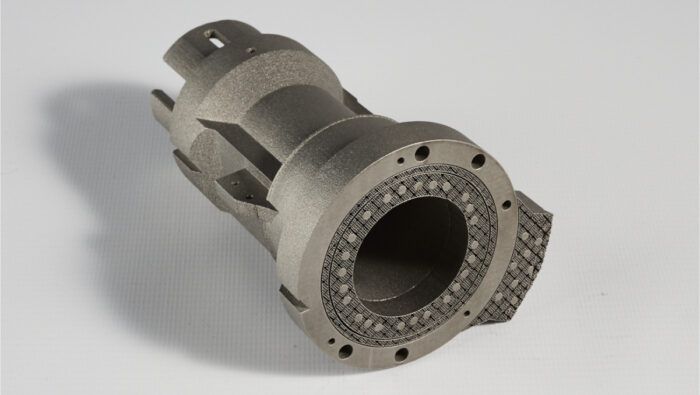
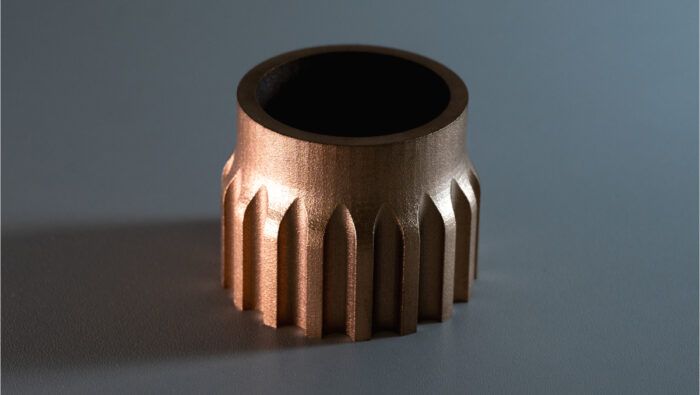
Metal additive manufacturing enables the production of tooling with complex internal structures and functional features that are not achievable through conventional machining.
With Powder Bed Fusion, engineers can:
- integrate conformal cooling channels for improved thermal control
- build internal cavities and functional surfaces without additional machining
- consolidate assemblies into single, more reliable components
- reduce setup time and accelerate prototyping
This improves flexibility, reduces waste, and shortens development cycles, turning tooling into a strategic asset rather than a constraint. PBF is suited for jigs, fixtures, tooling inserts, dies, deep drawing tools, hot stamping tools, and custom machinery components.
Remanufacturing high value tooling and machine parts
Tool wear, surface fatigue, and local damage are common issues in industrial machinery. Traditional replacement is expensive and often associated with long lead times.
With Direct Energy Deposition combined with automated workflows, AltForm enables the complete remanufacturing of worn tooling and mechanical parts. Material can be rebuilt exactly where needed, restoring original geometry or improving it.
Main benefits include:
- cost reduction compared to full replacement
- less downtime during maintenance operations
- extended service life and improved reliability
- the possibility to upgrade the component during repair
Remanufactured components often show performance equal to or better than the original part, thanks to improved material properties and optimized surfaces.
Laser coating for wear resistance and thermal stability
Surface durability is often the main factor that limits tool life. Laser coating is an efficient solution for applying wear-resistant, corrosion-resistant, and thermally stable materials onto high-stress areas.
Laser coating allows:
- targeted deposition of hard alloys
- increased resistance to abrasion, corrosion, and thermal cycling
- reduced maintenance and more predictable tool life
- performance upgrades without replacing the base component
AltForm’s laser coating systems are designed for continuous industrial use and can be integrated into automated production lines with real-time monitoring and full digital control.
Laser hardening for surface strength and fatigue resistance
Laser hardening modifies only the surface layer of the material, increasing hardness and fatigue strength while keeping the core properties unchanged. This creates components that withstand repetitive loads and friction without premature failure.
For tooling and machinery parts, laser hardening ensures:
- higher surface hardness
- reduced wear on critical zones
- better performance in repetitive cycles
- extended maintenance intervals
This treatment is ideal for tools, guides, mechanical interfaces, gears, and high-stress components.
Materials engineered for mechanical performance
Tooling and machinery components require materials that offer strength, toughness, thermal stability, and wear resistance. AltForm solutions support a wide range of industrial alloys, including:
- tool steels designed for wear resistance and thermal stability
- maraging steels for high-strength tooling
- nickel-based and cobalt-based superalloys
- copper alloys and aluminum for thermal management inserts
Advanced monitoring and process control guarantee consistent mechanical properties, making AM compatible with demanding production environments.
Our solutions for the tooling industry
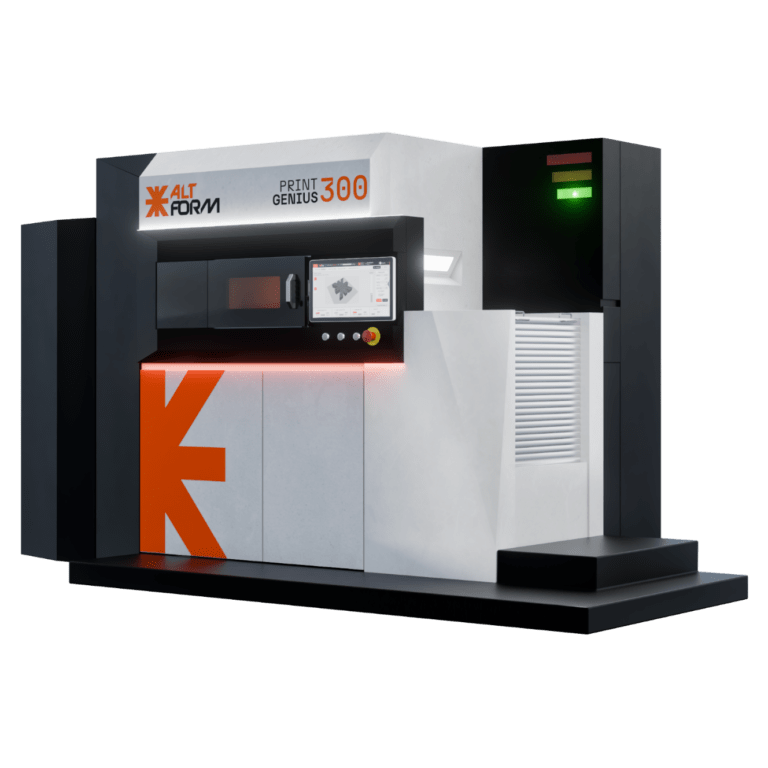
Print 300 Series
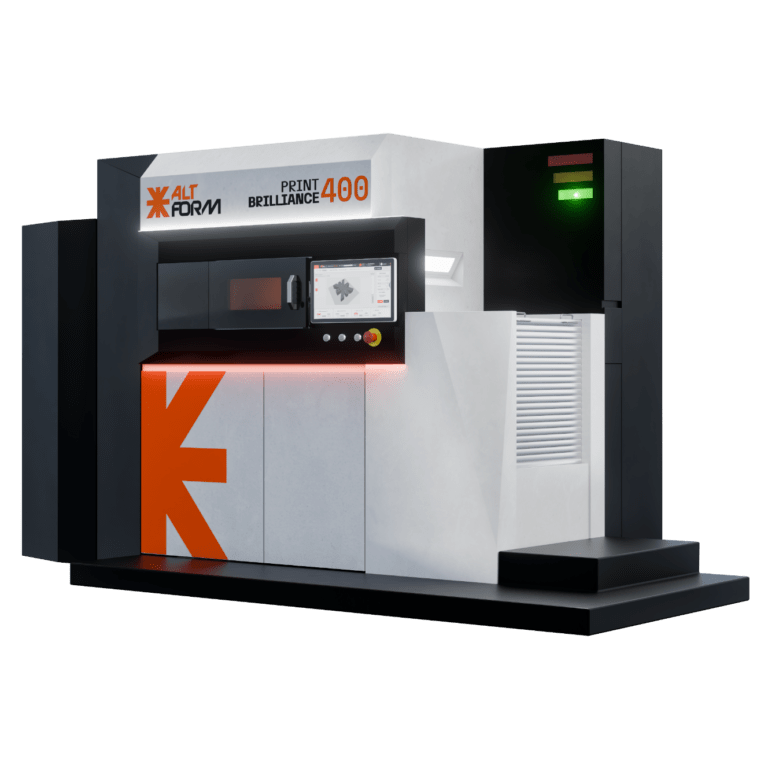
Print 400 Series
ZENIT Cell