Engineering components for additive manufacturing performance
Metal additive manufacturing enables geometries and functional features that cannot be achieved through conventional production methods. Internal channels, lightweight structures, and part consolidation open new possibilities for improving component performance.
However, unlocking these benefits often requires rethinking how components are designed. Parts originally developed for machining, casting, or forging rarely exploit the full potential of additive manufacturing. Without redesign, manufacturers risk using advanced technologies while maintaining the limitations of traditional design logic.
AltForm supports engineering teams in transforming existing components into additive-ready designs, enabling improved functionality, optimized material usage, and more efficient production workflows.
Our Design for Additive Manufacturing (DfAM) expertise helps companies move beyond simple prototyping and develop components that are engineered for industrial additive production.
Designing components for advanced manufacturing
Design for additive manufacturing is about designing components that improve performance, simplify production, and reduce lifecycle costs.
AltForm engineers collaborate with customers to analyze existing components and identify opportunities where additive manufacturing can deliver measurable advantages. This often involves rethinking geometry, material distribution, and assembly strategies.
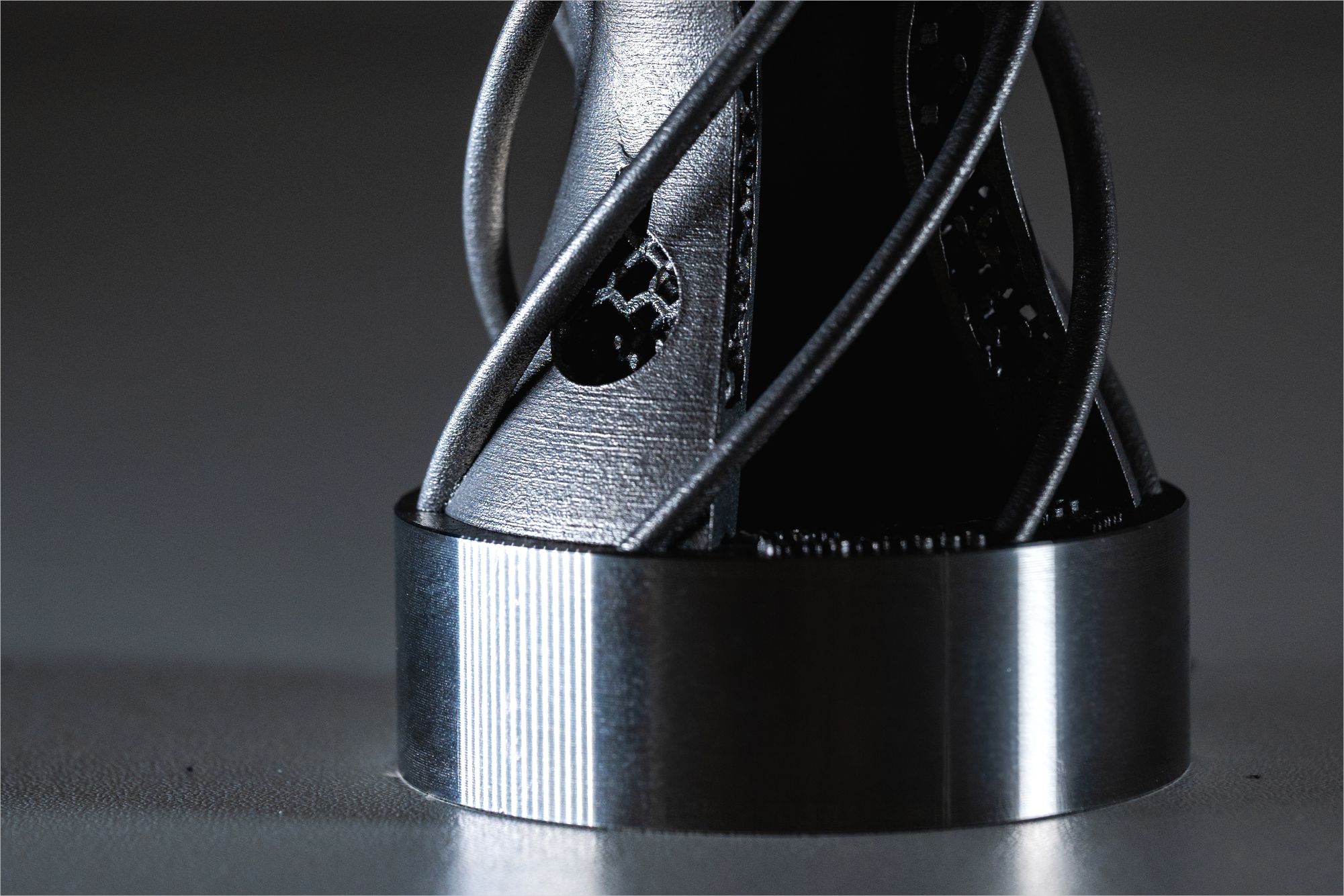
For example, additive manufacturing allows the integration of internal cooling channels, optimized flow paths or lightweight lattice structures that would be impossible to manufacture using traditional methods.
In other cases, multiple parts can be consolidated into a single component. This reduces assembly operations, eliminates potential failure points, and simplifies supply chains.
Through this design approach, additive manufacturing becomes a tool for functional engineering rather than geometric experimentation.
How AltForm supports you
Design support at AltForm combines engineering analysis, simulation tools and manufacturing expertise. Our goal is to ensure that redesigned components are both technically optimized and manufacturable within stable industrial processes.
Component analysis and feasibility assessment
The design process begins with a detailed analysis of the component’s functional requirements. Our teams evaluate loads, thermal conditions, material behavior and performance constraints to determine how additive manufacturing can improve the design. This stage identifies opportunities for lightweighting, improved thermal management or part consolidation.
Topology optimization and functional redesign
Using advanced simulation tools, AltForm engineers optimize the distribution of material within the component. Topology optimization allows engineers to remove unnecessary material while maintaining structural integrity. This approach can significantly reduce weight while preserving mechanical performance, which is particularly important in industries such as aerospace, automotive and energy.
Design of internal features and functional geometries
Additive manufacturing allows engineers to integrate features that enhance component performance. Examples include conformal cooling channels for tooling applications, optimized flow paths for thermal systems or lattice structures for lightweight designs. These features are designed with manufacturing constraints in mind to ensure repeatable production.
CAD model development and process preparation
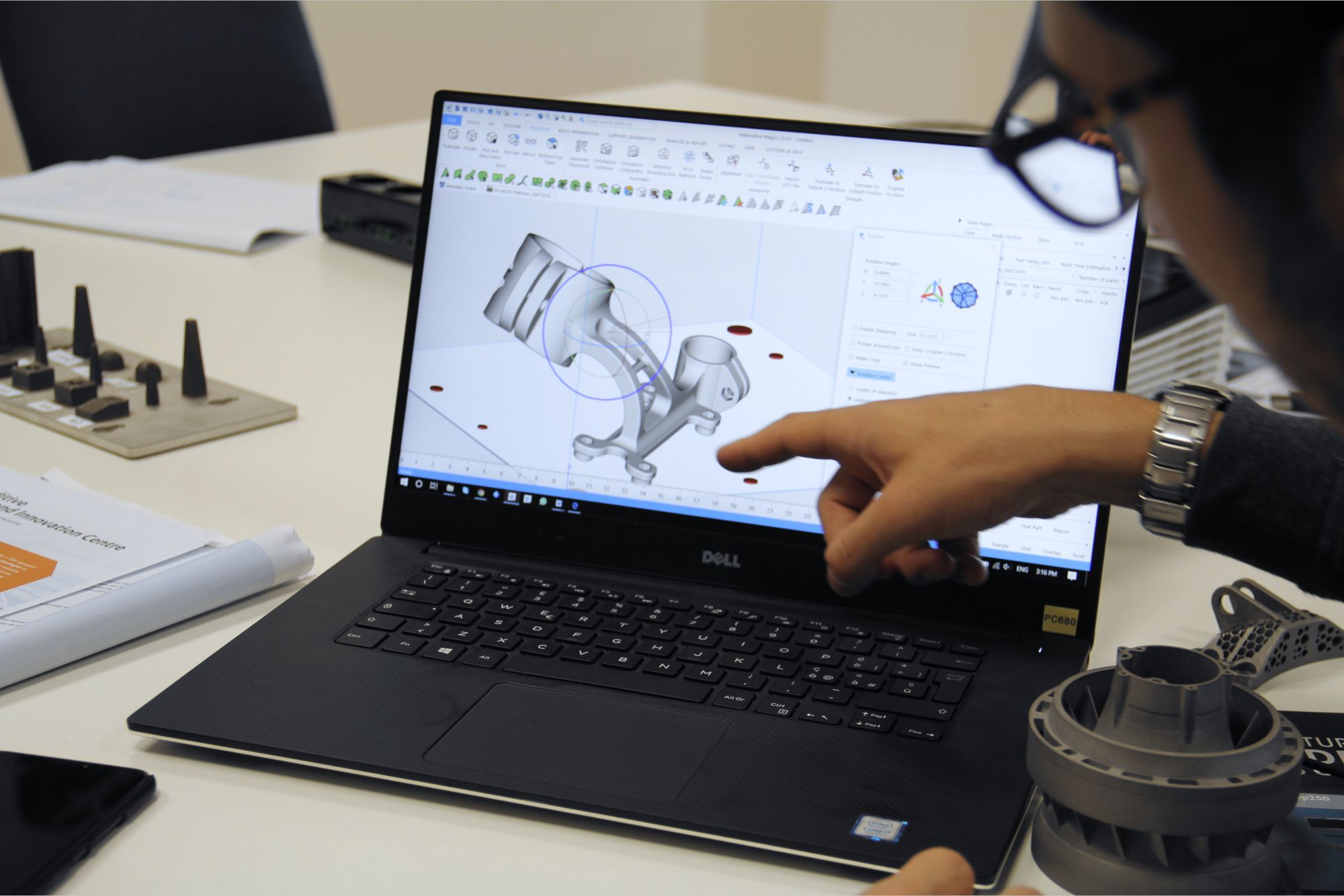
Once the optimized design is defined, AltForm supports the development of production-ready CAD models. This includes preparing the component for additive manufacturing, defining build orientation strategies and ensuring compatibility with Powder Bed Fusion or Direct Energy Deposition processes. This phase ensures that the design transition from digital model to physical component remains reliable and repeatable.
Related services
Application Support
Production Scalability Support
Operator and Engineering Training