Scaling additive manufacturing from development to industrial production
Many manufacturers successfully validate additive manufacturing through prototypes and pilot projects. The real challenge often emerges in the next phase: scaling the technology into stable and economically viable production workflows.
Industrial adoption requires more than a working process. It involves production planning, process repeatability, automation strategies, and integration with existing manufacturing systems.
AltForm supports companies in transforming additive manufacturing from a development tool into a reliable industrial production technology. Our teams help customers design scalable production architectures based on Powder Bed Fusion and Direct Energy Deposition, ensuring that validated applications can evolve into long-term manufacturing solutions.
When additive manufacturing moves beyond prototyping
In the early stages of adoption, additive manufacturing is often used for prototyping, product development or low-volume production. As applications mature, companies begin to evaluate how these technologies can support larger production volumes.
Scaling additive manufacturing requires addressing several technical and operational factors. Build strategies must be optimized for productivity, machine utilization must be carefully managed, and quality control procedures must ensure consistent results across multiple production cycles.
Equally important is the integration of additive technologies within the broader manufacturing environment. Production planning, post-processing operations and material management must all be considered when moving toward industrial scale.
AltForm works with manufacturers to design production strategies that combine technological performance with operational efficiency.
How AltForm supports you
Our production scalability services focus on helping companies implement additive manufacturing as a structured and repeatable manufacturing process.
Industrial feasibility and business case analysis
Scaling additive manufacturing begins with a clear understanding of economic viability. AltForm engineers support customers in evaluating cost per part, production throughput and investment requirements. This analysis allows manufacturers to determine whether additive manufacturing can support their long-term production objectives.
Production workflow optimization
To achieve stable industrial production, processes must be optimized for productivity and repeatability. AltForm supports customers in defining build strategies, machine utilization models and post-processing workflows that maximize efficiency. Optimizing these parameters can significantly improve throughput while maintaining consistent part quality.
Multi-machine production architectures
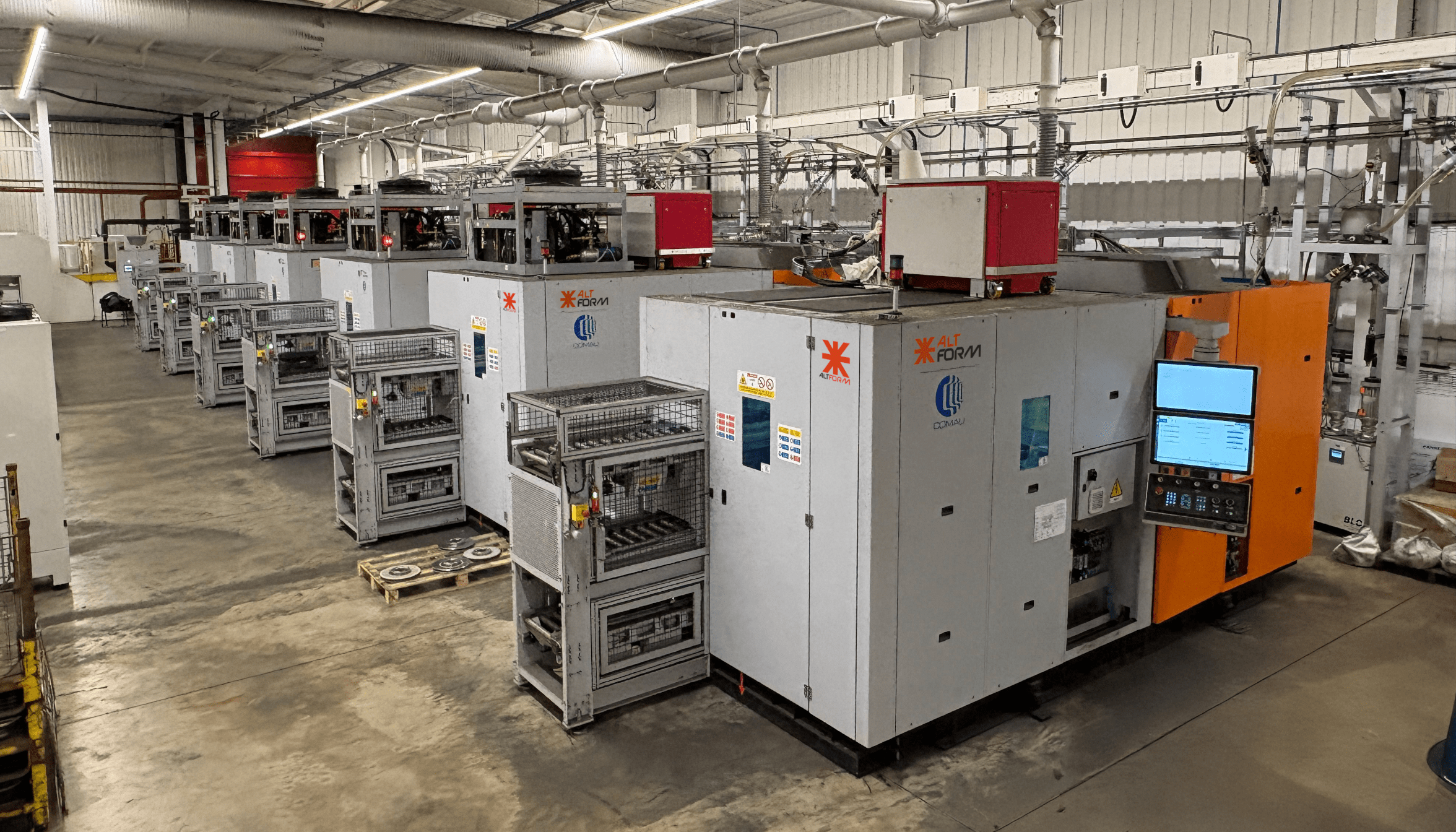
As production volumes increase, additive manufacturing often evolves from a single machine setup to multi-machine production environments. AltForm supports the design of modular production architectures where multiple systems operate within coordinated workflows. These configurations enable higher productivity and allow manufacturers to expand capacity progressively.
Integration with hybrid manufacturing strategies
In many industrial environments, additive manufacturing works alongside conventional processes such as machining or surface finishing. Hybrid production strategies combine the advantages of different technologies to achieve optimal results. AltForm helps customers define manufacturing workflows where additive processes integrate naturally with traditional production steps.
Related services
Automation and Integration
Application Support
Investment and Financial Solutions