In metal additive manufacturing, the interaction between the laser source and the metallic material is a decisive factor for process stability and final part quality. For years, infrared lasers have been the standard in both Powder Bed Fusion and Direct Energy Deposition. However, when processing highly reflective materials such as copper, copper alloys, and precious metals, infrared radiation reveals intrinsic physical limitations.
The high reflectivity of these metals reduces initial energy absorption, making melt pool initiation unstable and often requiring increased power input to maintain process continuity. This can result in variability, porosity, and reduced density in the final component.
Recent industrial and academic studies highlight that shorter wavelengths, such as blue laser technology, significantly improve absorption in reflective metals. Because copper absorbs blue light more efficiently than infrared radiation, energy coupling becomes more stable and controlled. This leads to improved melting dynamics, lower required energy input, and enhanced metallurgical consistency.
At AltForm, blue laser technology is integrated in both Powder Bed Fusion and Direct Energy Deposition, enabling industrial-scale processing of highly reflective materials.
Why wavelength directly impacts material behavior
Metal absorption is wavelength-dependent. In materials like copper, infrared reflectivity is high at room temperature, limiting the efficiency of energy transfer during the early stages of melting. With a blue laser source, reflectivity decreases and absorption increases, enabling faster and more stable melt pool formation.
This shift in absorption behavior generates measurable engineering advantages. Improved energy coupling reduces the need for excessive power density, stabilizes thermal gradients, and minimizes process fluctuations. For conductive materials, these factors directly influence density, microstructure, and repeatability.
From a production perspective, higher absorption translates into better process predictability.

Blue laser in Powder Bed Fusion with Print Blue 100
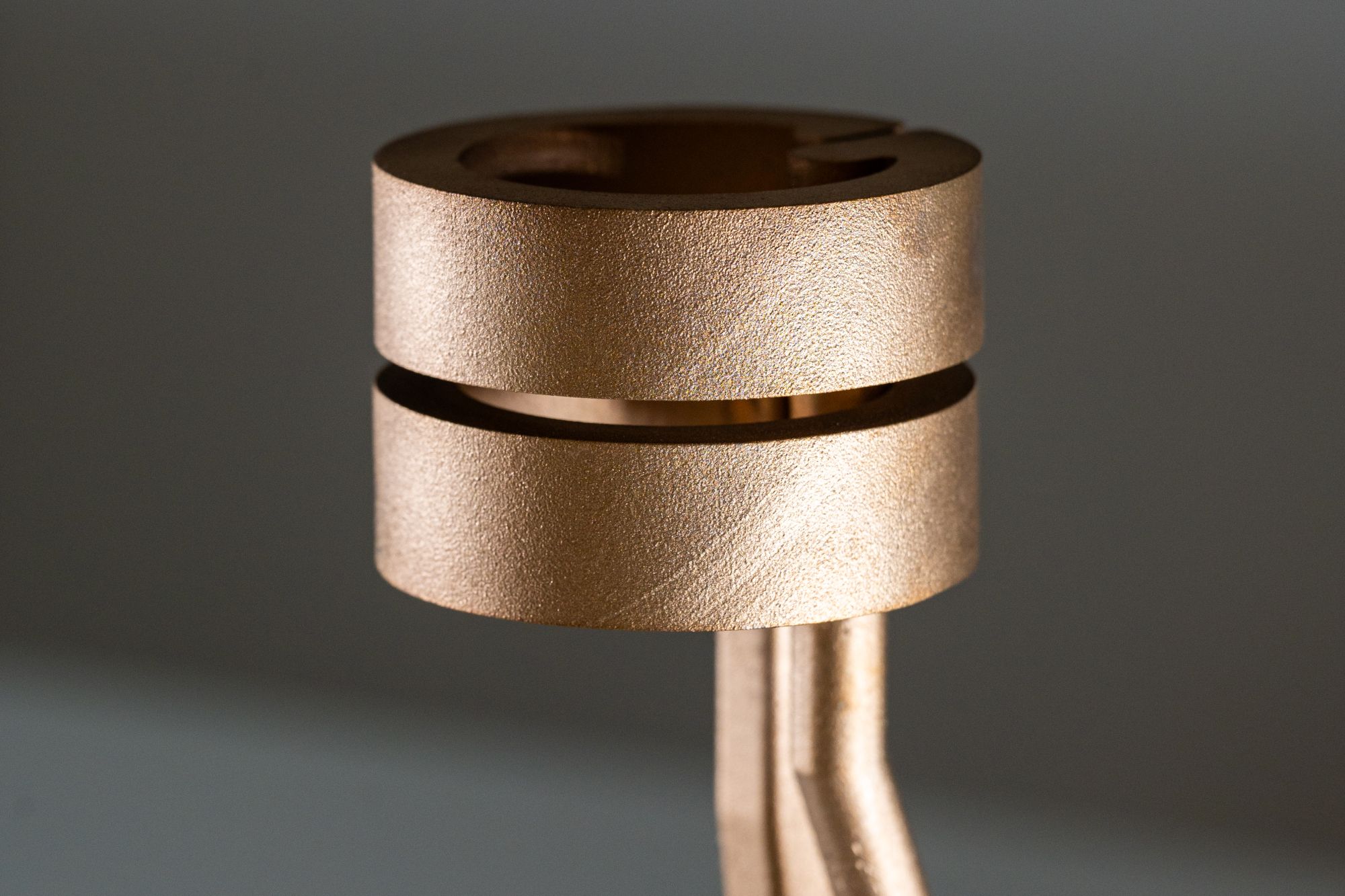
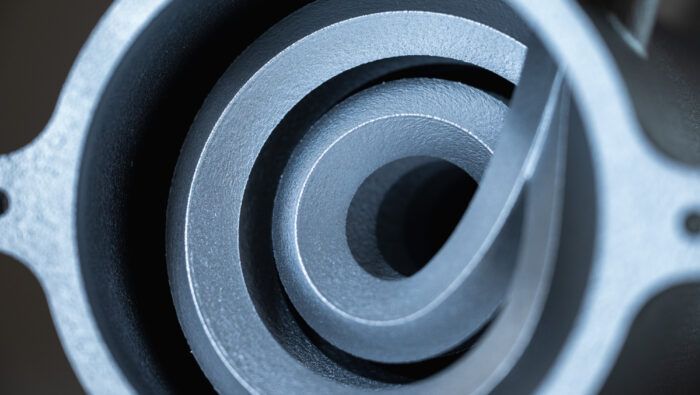
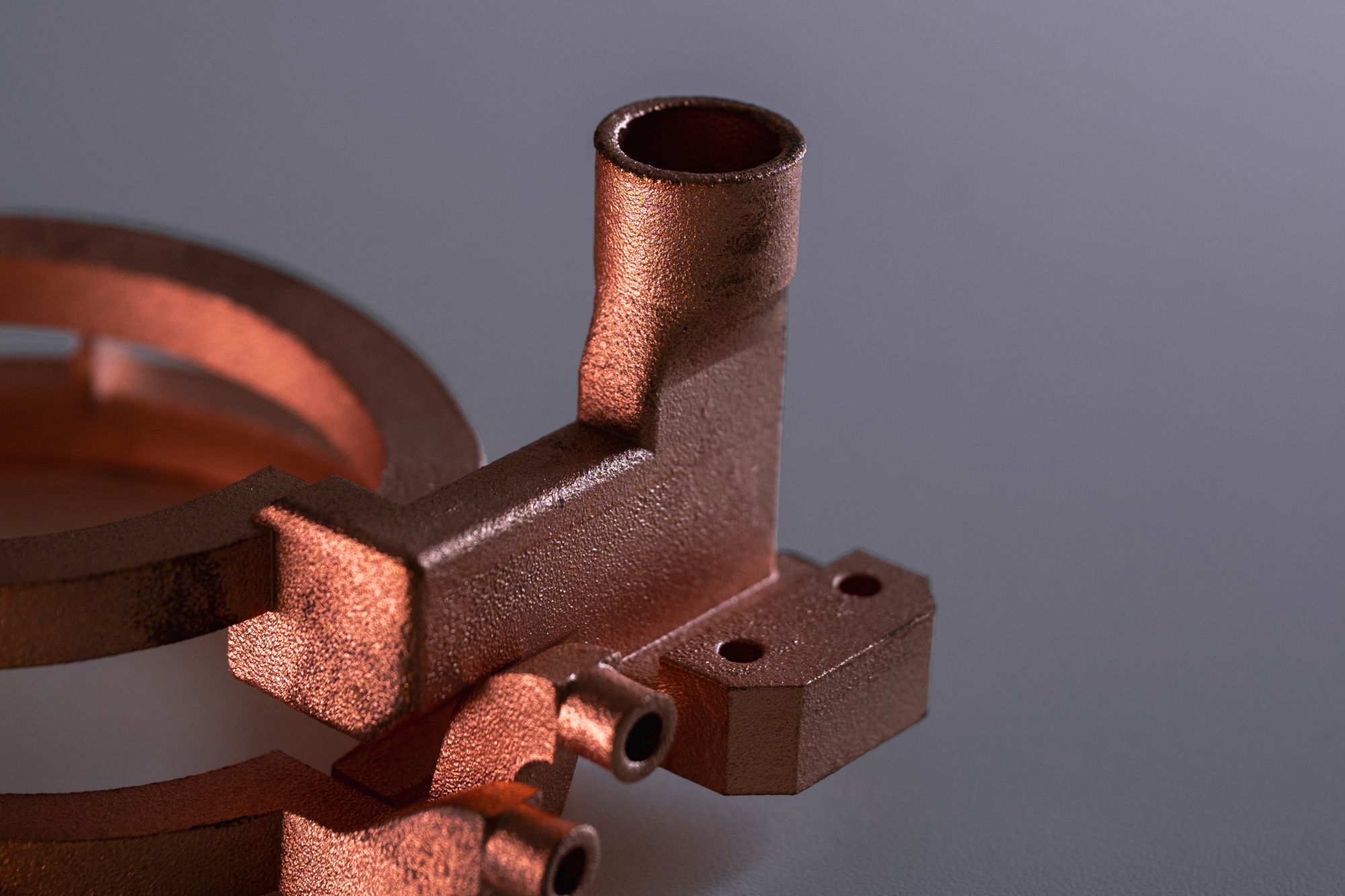
The Print Blue 100 is AltForm’s Powder Bed Fusion platform equipped with a blue laser source. The system is specifically engineered for materials that are challenging to process with infrared wavelengths, including copper, copper alloys, and precious metals.
In conventional infrared-based Powder Bed Fusion, copper often requires elevated power levels and narrow parameter windows to compensate for low absorption. With a blue laser, energy is absorbed more efficiently from the first interaction with the powder bed, resulting in a more stable melt pool from the initial layers.
For engineers, this translates into higher-density copper components, improved retention of electrical and thermal conductivity, reduced risk of lack-of-fusion defects, and more consistent layer bonding.
These characteristics are particularly relevant in applications such as thermal management systems, power electronics, inductors, and high-efficiency heat exchangers, where copper performance must be preserved.
The Print Blue 100 also supports advanced parameter flexibility, allowing research centers and industrial manufacturers to qualify new alloys and refine process strategies under controlled and repeatable conditions.
Blue laser in Direct Energy Deposition with ZENIT
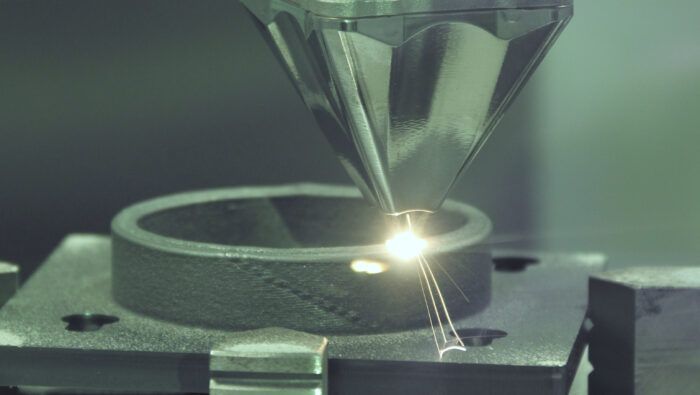
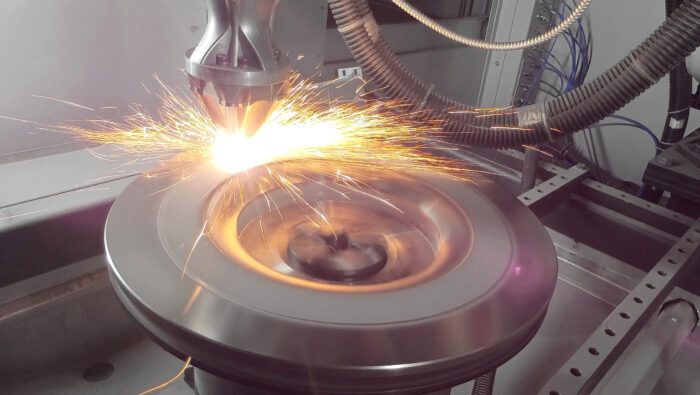
Blue laser capability extends beyond Powder Bed Fusion. In Direct Energy Deposition, efficient energy absorption is essential for maintaining stable bead geometry and metallurgical integrity. The ZENIT robotic platform can be equipped with blue laser sources for processing copper and other reflective alloys.
In DED processes, melt pool stability directly affects deposition shape, dilution, and mechanical properties. With improved absorption, blue laser DED reduces instability phenomena and supports more consistent deposition results.
ZENIT offers configurable laser sources depending on application requirements. Blue laser sources can be dedicated to copper and high-reflectivity materials, while infrared sources remain suitable for steels, nickel-based alloys, or titanium. This flexibility enables advanced multi-material strategies within industrial environments.
Industrial applications enabled by blue laser processing
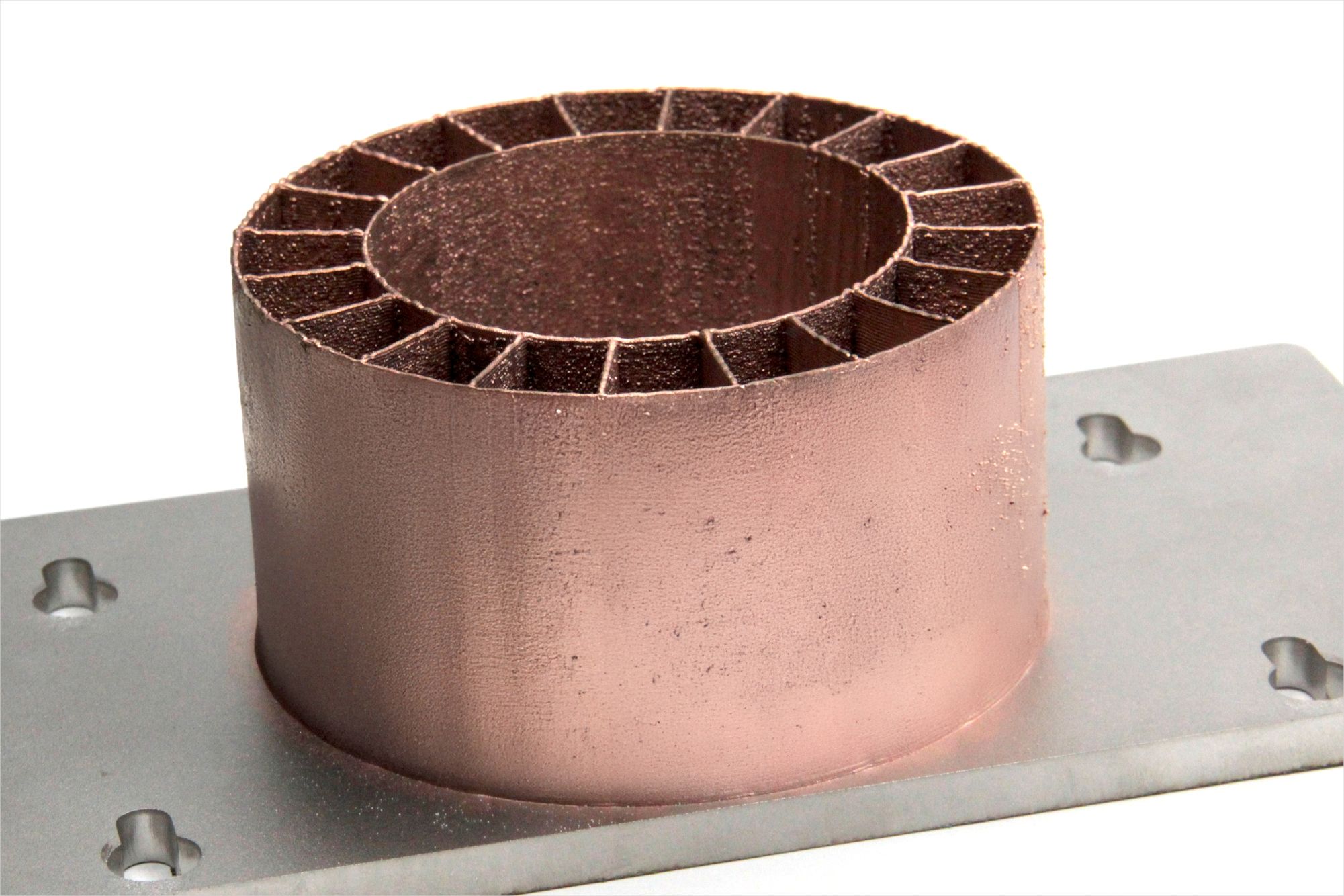
Blue laser technology expands the industrial feasibility of reflective metals in additive manufacturing. Copper and copper alloys are central to electrification strategies, including electric motors, battery systems, and power distribution units, where high thermal and electrical conductivity are critical.
In aerospace and automotive sectors, efficient thermal management components benefit from stable copper processing. In precision manufacturing and jewelry applications, the stable melting behavior of reflective alloys improves dimensional accuracy and surface quality.
The advantage lies in process control, energy efficiency, and repeatability rather than raw power increase.
From research capability to industrial deployment
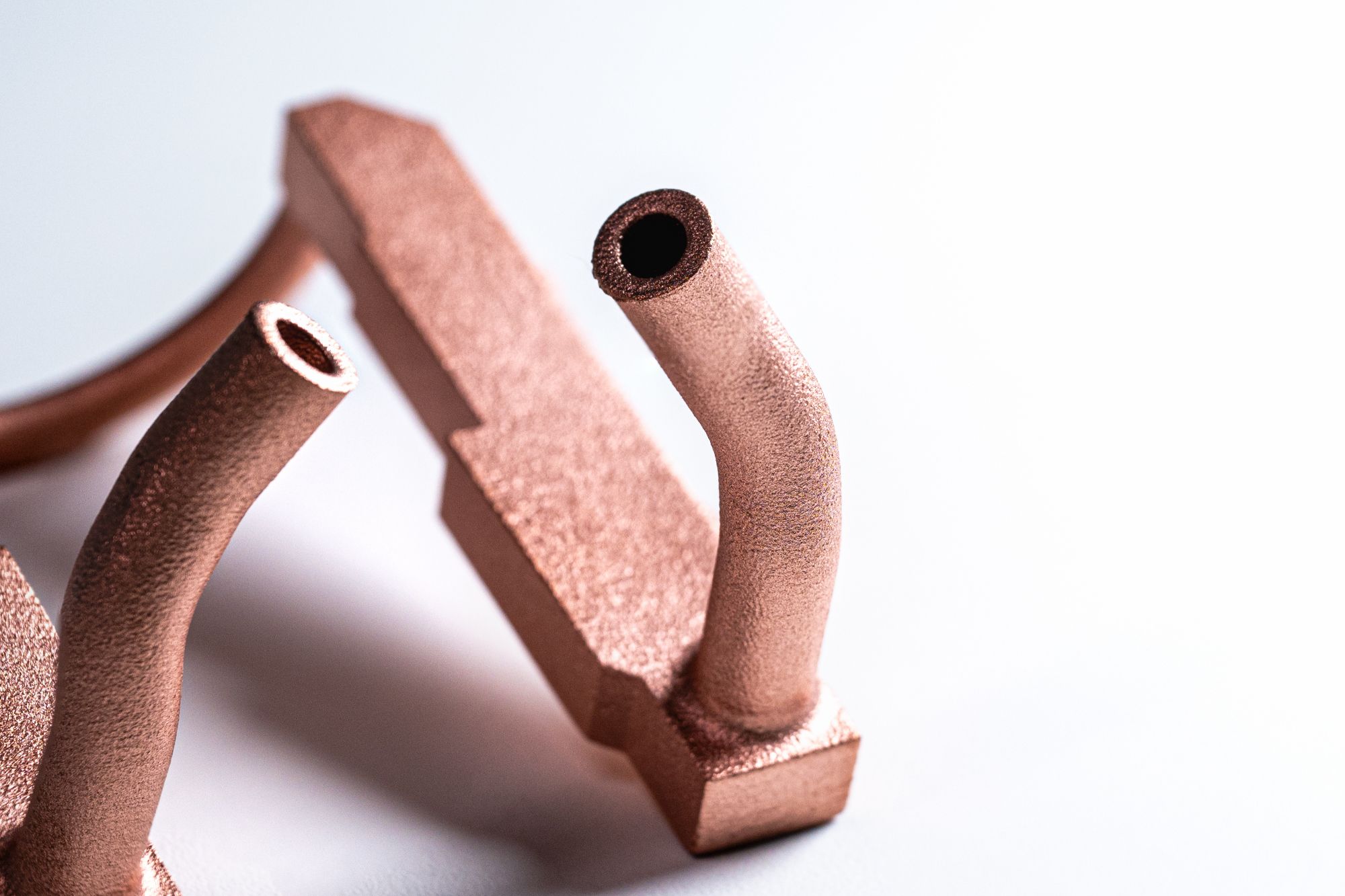
Blue laser processing is frequently discussed in research contexts. Translating it into reliable production requires more than a laser source. It requires integration into robust machine architectures with controlled gas flow, motion precision, monitoring systems, and stable parameter management.
AltForm integrates blue laser technology within platforms engineered for industrial deployment. Both the Print Blue 100 and the ZENIT platform are designed to support repeatability, process stability, and integration into digital manufacturing environments.
The objective is clear: enable reliable processing of reflective metals within production workflows where quality, traceability, and uptime are critical.