Die and mold manufacturing is one of the most demanding segments of industrial production. Whether in plastic injection molding, aluminum die casting, hot stamping, or metal forming, molds must guarantee dimensional precision, thermal stability, and long service life under extreme mechanical and thermal loads.
In this context, metal additive manufacturing has evolved from an experimental technology into a strategic production tool. At AltForm, we approach die and mold applications from an industrial perspective, integrating Powder Bed Fusion systems such as the Print 300 and Print 400, and Direct Energy Deposition solutions based on the ZENIT robotic cell, to address both new mold production and lifecycle management.
Our long experience in advanced laser technologies allows us to configure systems with 1, 2, or 4 lasers, selecting the appropriate power and architecture according to production volume, part size, and material. This configuration flexibility is essential in tooling, where thermal control and dimensional consistency directly affect productivity.
Powder Bed Fusion for new molds and conformal cooling inserts
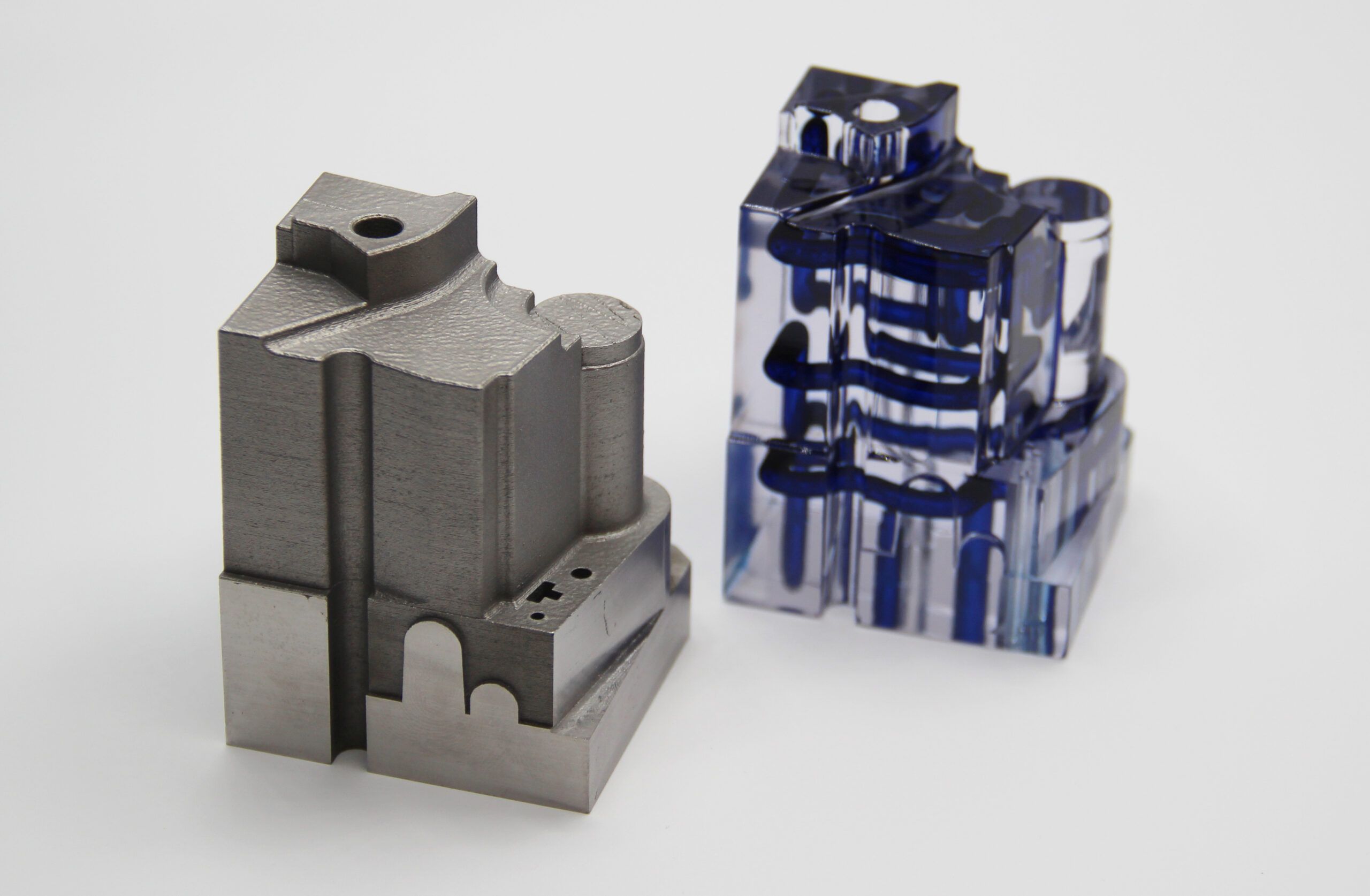
In mold making, thermal management defines performance. Conventional drilling methods limit the geometry of cooling channels, often forcing linear paths that cannot follow the cavity profile. This results in temperature gradients, longer cycle times and increased scrap rates.
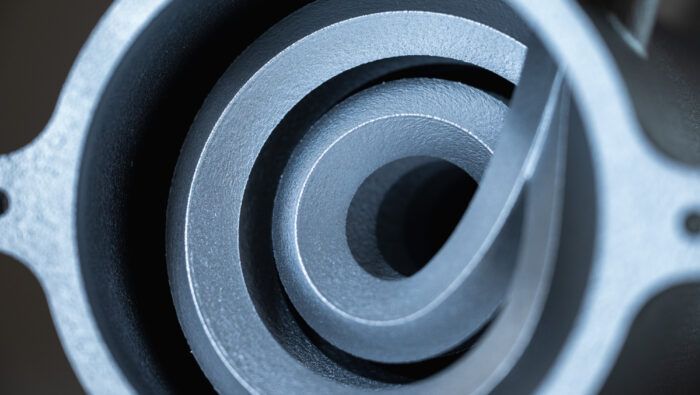
With Powder Bed Fusion, cooling channels can be designed to follow the contour of the cavity at a constant distance. These conformal cooling systems significantly improve heat extraction, reduce cycle time, and stabilize part quality. In injection molding and die casting, even a few seconds saved per cycle can translate into substantial annual productivity gains.
AltForm’s Print 300 and Print 400 platforms are engineered for industrial applications. Their multi-laser architecture with full overlap ensures uniform exposure across the entire build area. This is particularly important for large mold inserts, where thermal consistency during printing directly influences microstructure and dimensional accuracy.
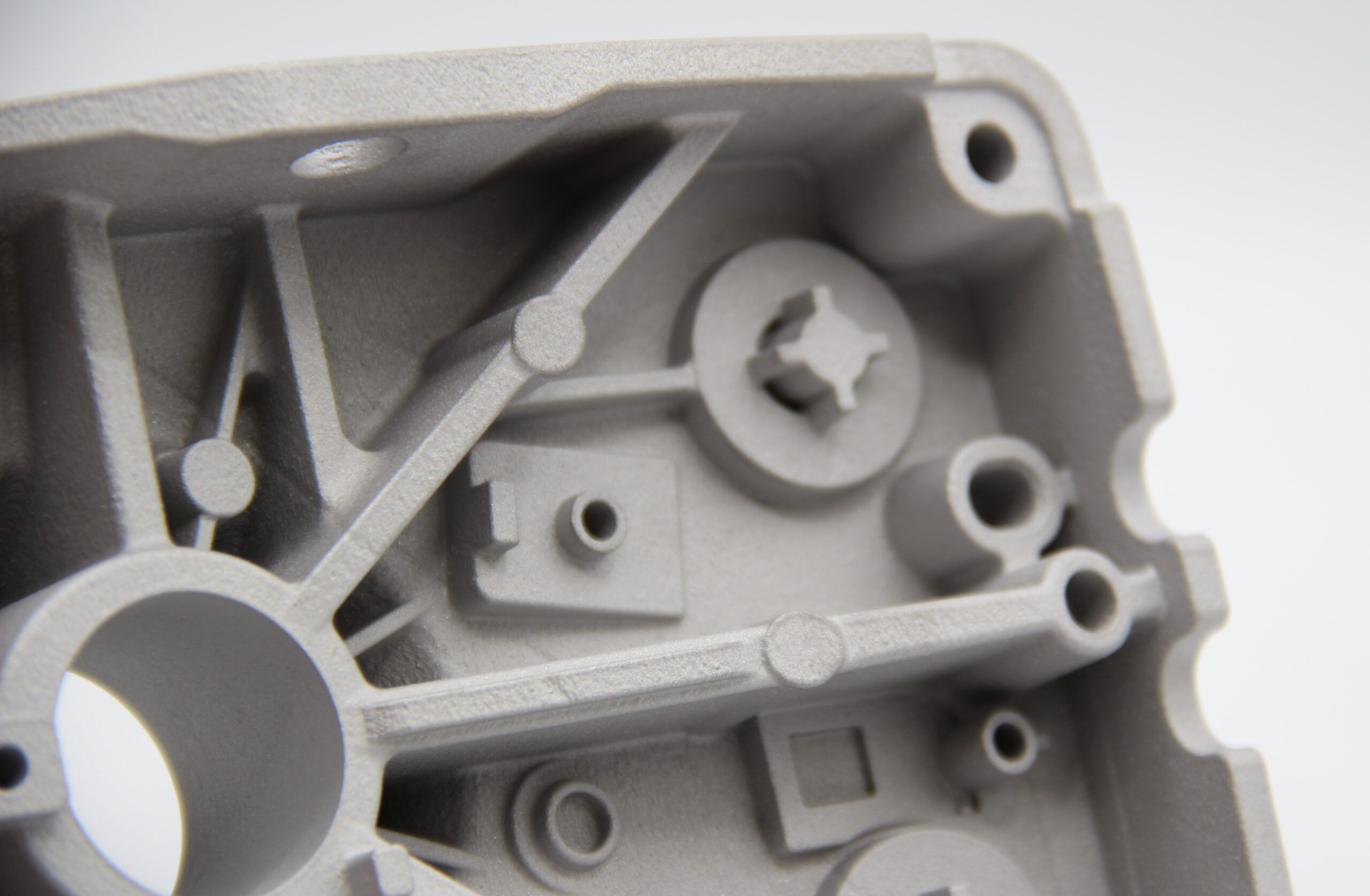
For aluminum die casting manufacturers, additive manufacturing also opens an additional opportunity. In conventional production, mold fabrication is economically viable only above certain volumes. For small or medium batches, often below 5,000 to 10,000 parts depending on geometry and complexity, building a dedicated steel die may not be competitive. In these cases, metal additive manufacturing enables the production of small series components without investing in a full traditional die, or supports the creation of optimized inserts that reduce development costs during pre-series production.
This approach is particularly valuable in sectors with frequent design updates or limited production runs.
Direct Energy Deposition for repair, coating and functionalization
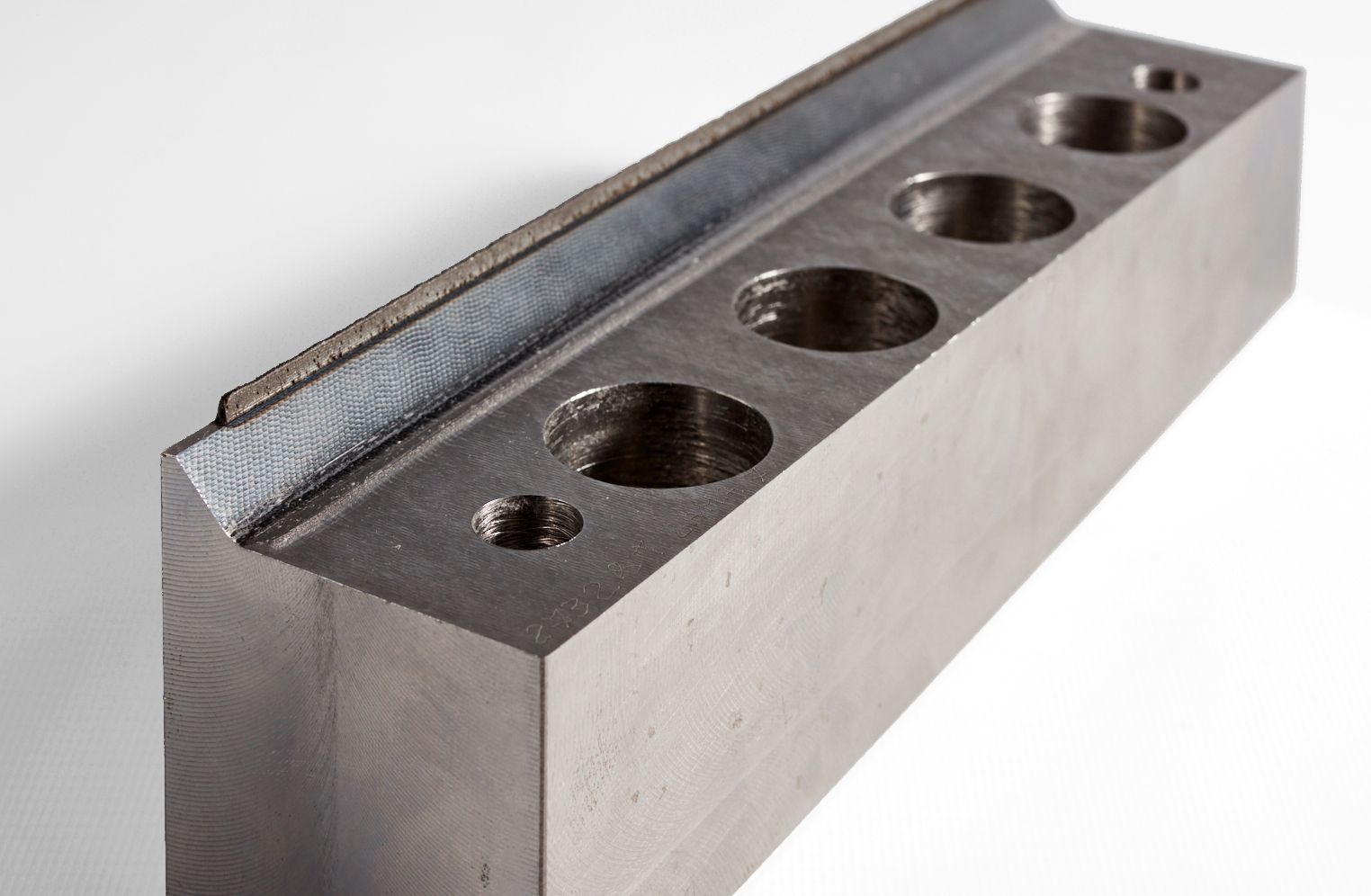
Tooling does not end with initial production. Wear, thermal fatigue, and localized damage are common in high-pressure die casting and hot forming environments. Replacing an entire mold because of localized degradation is rarely the most efficient strategy.
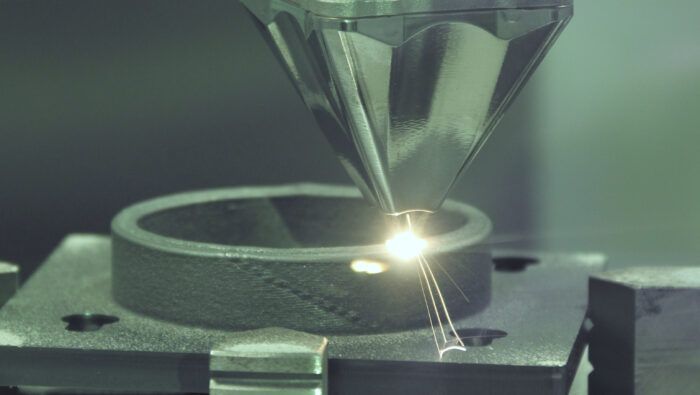
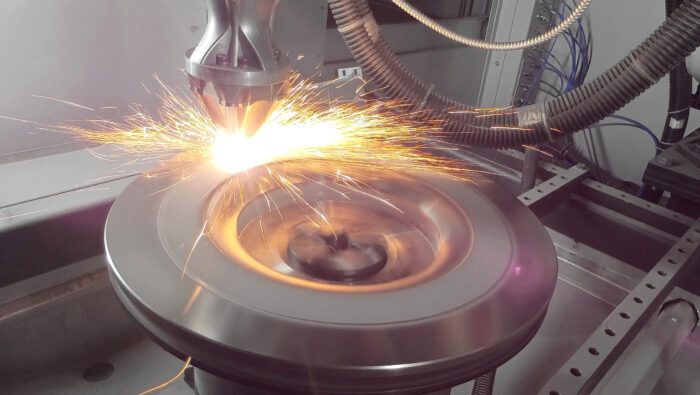
With Direct Energy Deposition on the ZENIT cell, material can be added precisely where needed. The process enables:
- Rebuilding worn surfaces
- Applying high-performance coatings on lower-cost substrates
- Adding new functional features to existing molds
Many AltForm customers have reported that repaired molds exhibit improved performance compared to the original component. This is possible because DED allows the application of optimized alloys in high-stress areas, improving wear resistance or thermal fatigue behavior beyond the initial design.
The ZENIT platform supports both powder and wire-based DED configurations, enabling flexibility in material selection and deposition strategy. It is particularly suitable for large molds where full replacement would imply high material and machining costs.
DED can also be used to functionalize a conventionally machined mold, adding cooling structures or reinforcement zones to an existing steel base. This hybrid strategy combines subtractive precision with additive flexibility.
Laser expertise and process optimization for tooling
Tooling applications require process stability. Microstructural homogeneity, density control and dimensional accuracy are essential to avoid premature tool failure.
AltForm integrates advanced laser architectures into its Powder Bed Fusion systems, offering configurations with 1, 2 or 4 lasers. Laser power is selected according to material type and production throughput. The full overlap strategy ensures that every laser can operate across the entire platform, maintaining consistent thermal input distribution.
Our engineering teams support customers in defining the correct configuration based on:
- Tool dimensions
- Production volume
- Material selection
- Cycle time targets
The goal is to balance productivity and precision without overdimensioning the system.
Industrial adoption of additive manufacturing in tooling
The adoption of additive manufacturing in die and mold applications often starts with pilot inserts. However, the industrial impact becomes evident when additive solutions are integrated into structured production workflows.
Benefits typically include:
- Reduced cycle time through optimized cooling
- Lower scrap rates
- Improved dimensional stability
- Extended tool life
- Reduced material waste
In die casting, conformal cooling inserts have demonstrated improved solidification control and lower porosity rates. In injection molding, optimized heat management reduces warpage and improves repeatability.
AltForm supports customers from feasibility analysis through parameter development and industrial scaling. The objective is to transition from isolated additive experiments to production-ready tooling strategies.