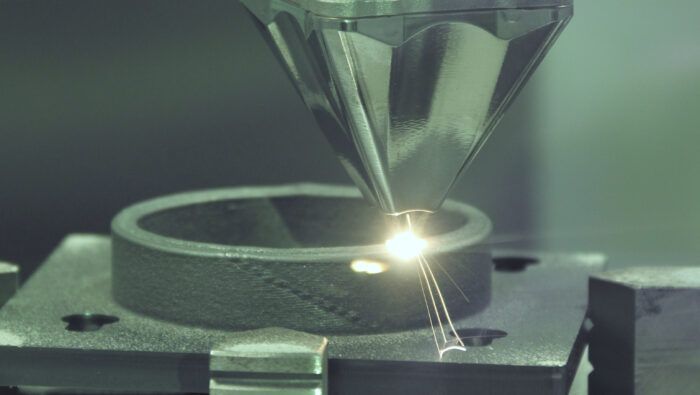
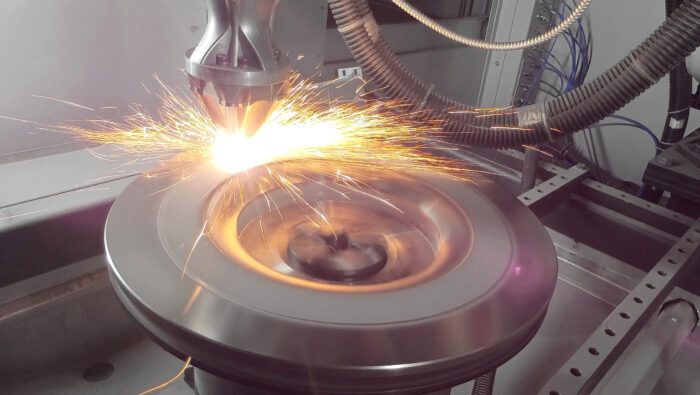
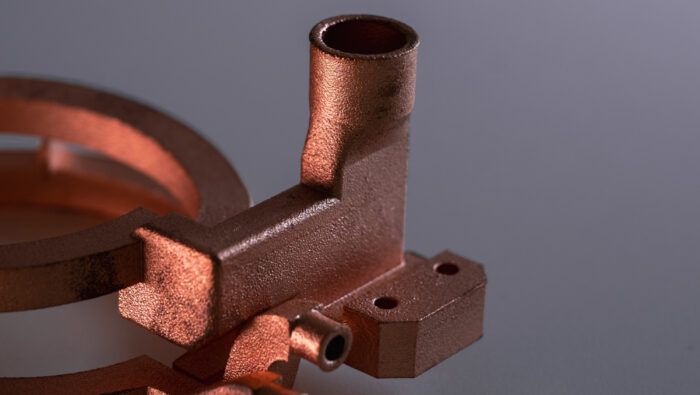
In many organizations, the adoption of Powder Bed Fusion begins with prototyping. Over time, the focus shifts toward industrial deployment. At that stage, the critical question changes. It is no longer about whether a part can be printed. It becomes about whether the component has been designed correctly for additive manufacturing.
Design for Additive Manufacturing, often referred to as DfAM, plays a central role in extracting the full value of Laser Powder Bed Fusion. The technology enables geometric freedom, but industrial performance depends on how this freedom is applied.
At AltForm, Powder Bed Fusion is engineered as a production technology. Designing for it requires a shift in mindset that integrates material science, thermal behavior, structural optimization, and downstream processing considerations.
Powder Bed Fusion as a design enabler
Laser Powder Bed Fusion builds components layer by layer by selectively melting metal powder according to a digital model. The layer-wise nature of the process allows the creation of geometries that would be impractical or uneconomical with subtractive manufacturing.
For engineers, this opens new design pathways:
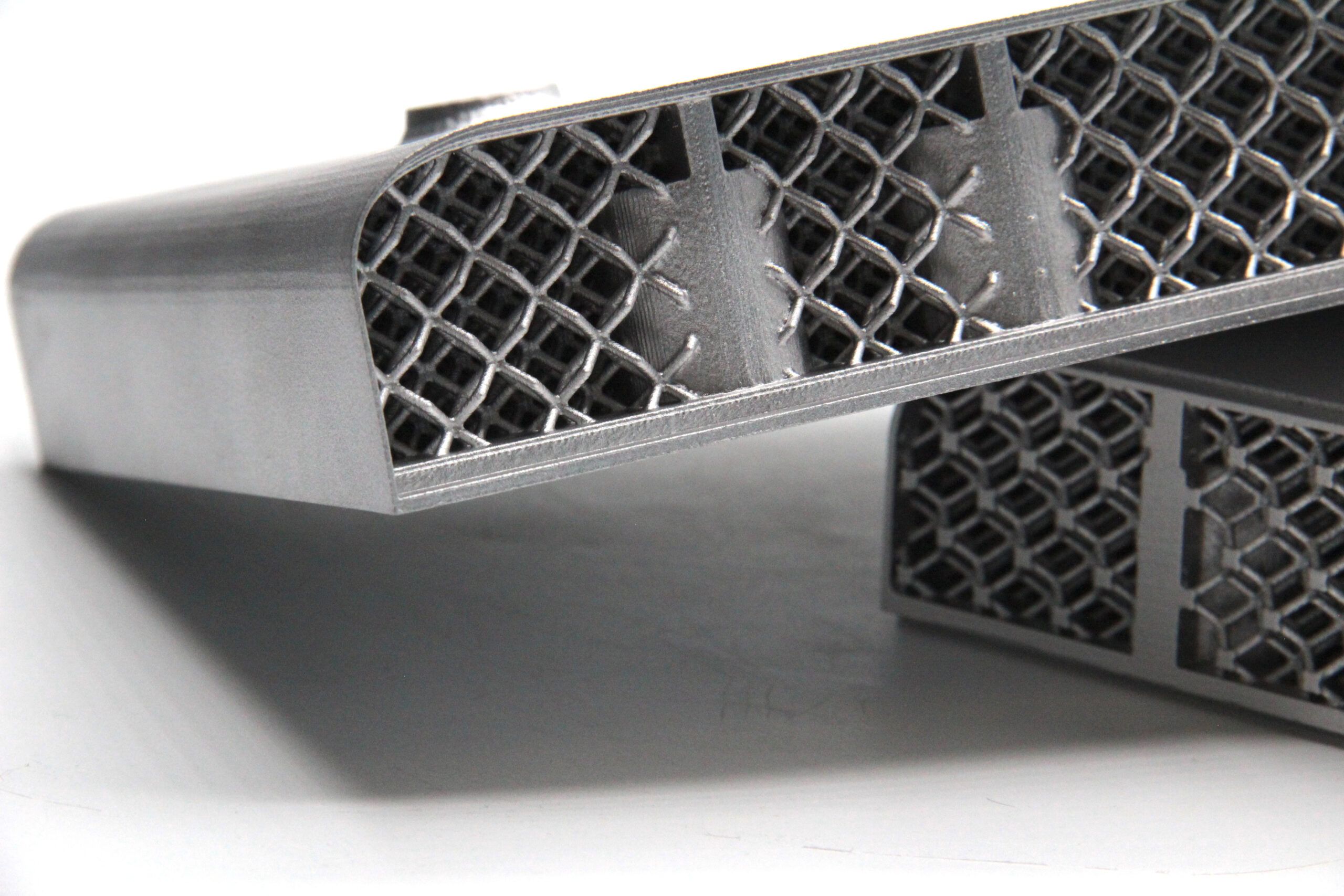
- Internal lattice structures for weight reduction
- Conformal cooling channels for thermal management
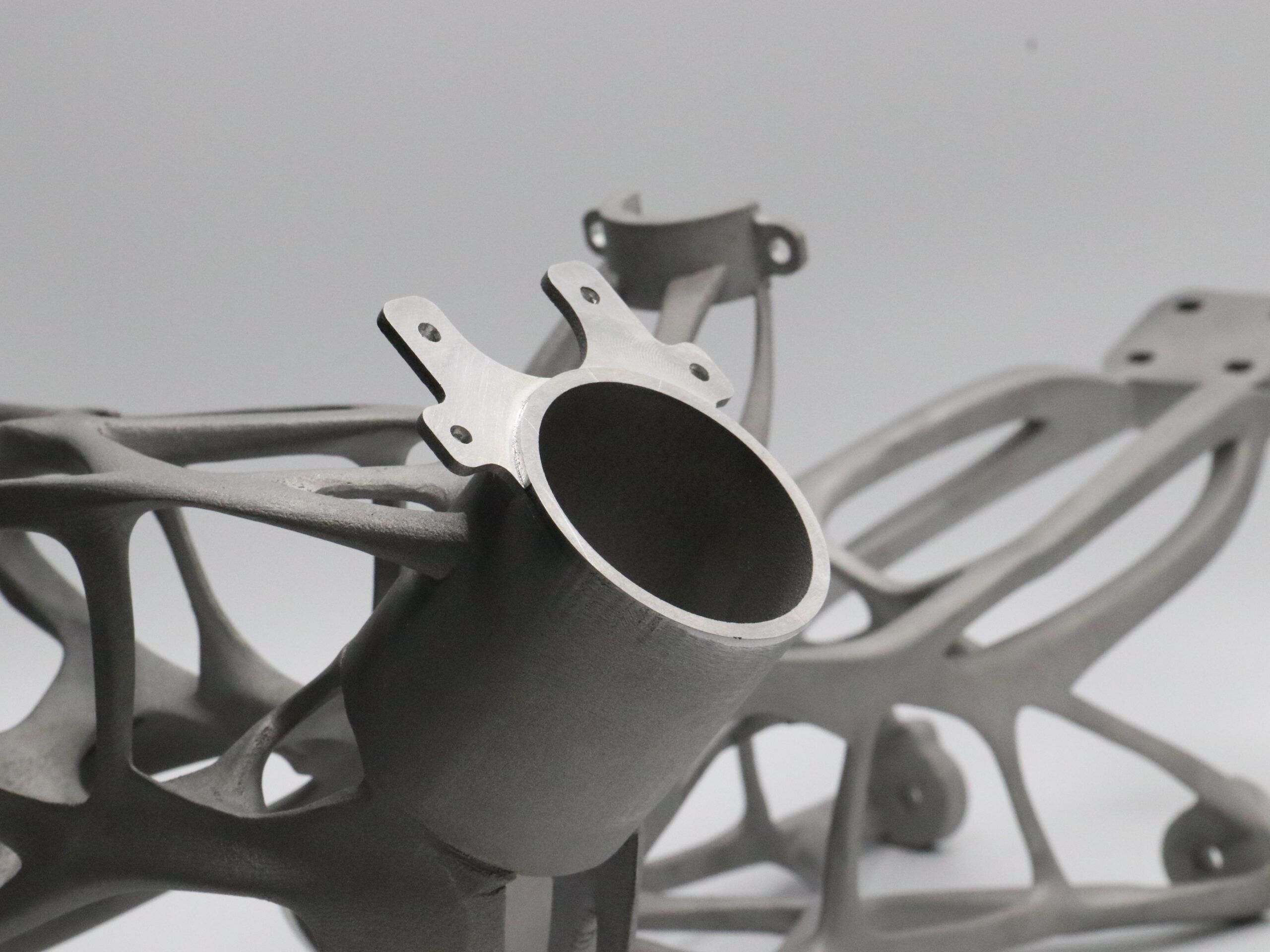
- Topology-optimized geometries aligned with load paths
- Consolidation of multiple parts into a single integrated component
However, these possibilities generate value only when the component is conceived specifically for additive manufacturing. Simply printing a conventionally designed part rarely delivers meaningful performance gains.
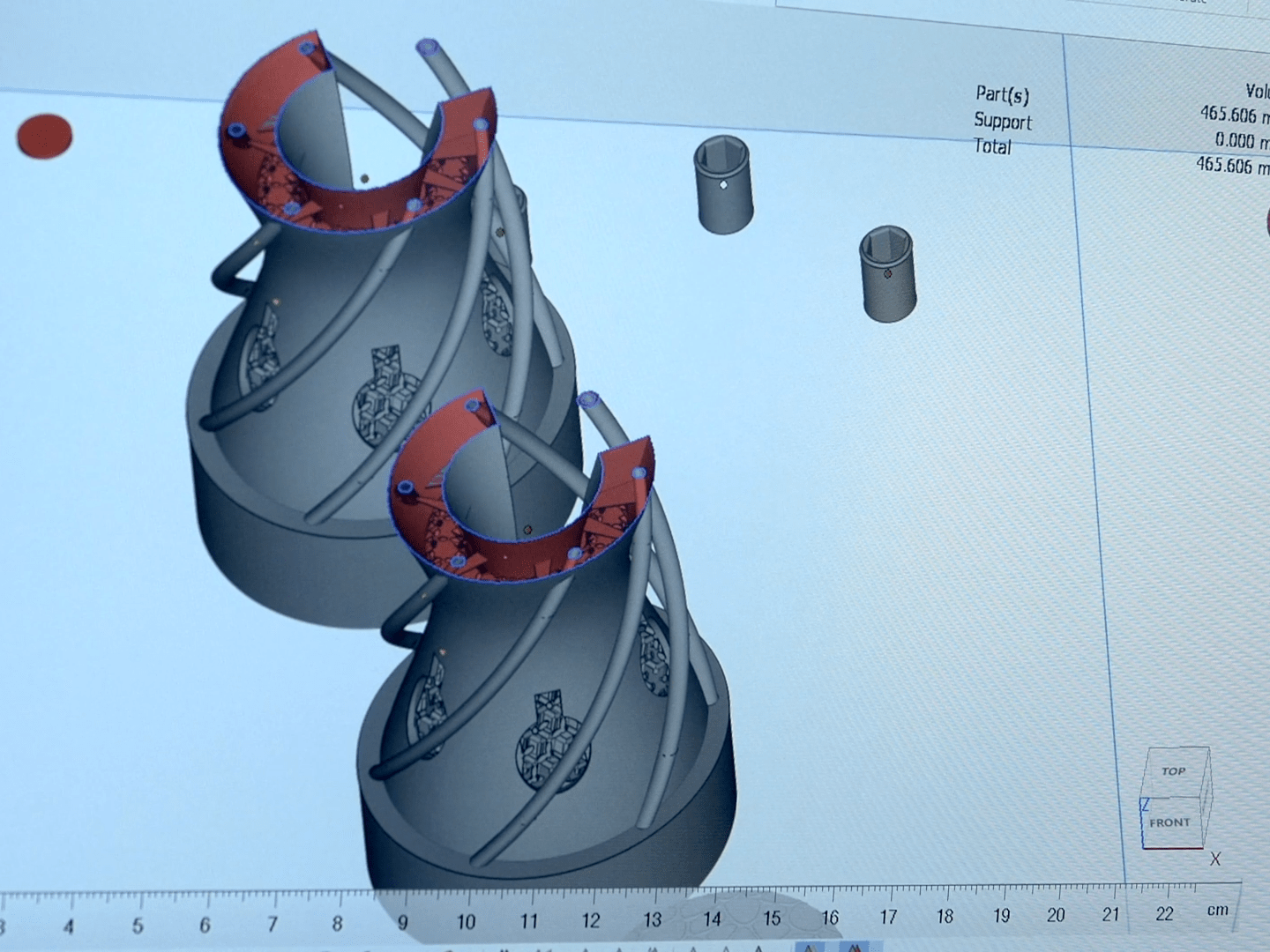
Designing for Powder Bed Fusion means understanding how material solidifies, how heat accumulates across layers and how support strategies influence distortion and residual stress. It also requires anticipating post-processing requirements such as machining, heat treatment or surface finishing.
Structural optimization and weight reduction
One of the most impactful advantages of designing for Powder Bed Fusion is structural optimization.
Through topology optimization algorithms, engineers can remove non-load-bearing material while maintaining structural integrity. This approach is particularly relevant in aerospace, automotive and energy sectors, where reducing mass directly improves system efficiency.
Internal lattice structures can further decrease weight while preserving stiffness. In addition to mass reduction, these structures can influence energy absorption and vibration behavior. When properly engineered, such geometries enhance mechanical performance rather than simply reducing material usage.
Powder Bed Fusion makes these geometries manufacturable at industrial scale.
Thermal management and functional integration
Thermal control is another area where DfAM delivers measurable benefits.
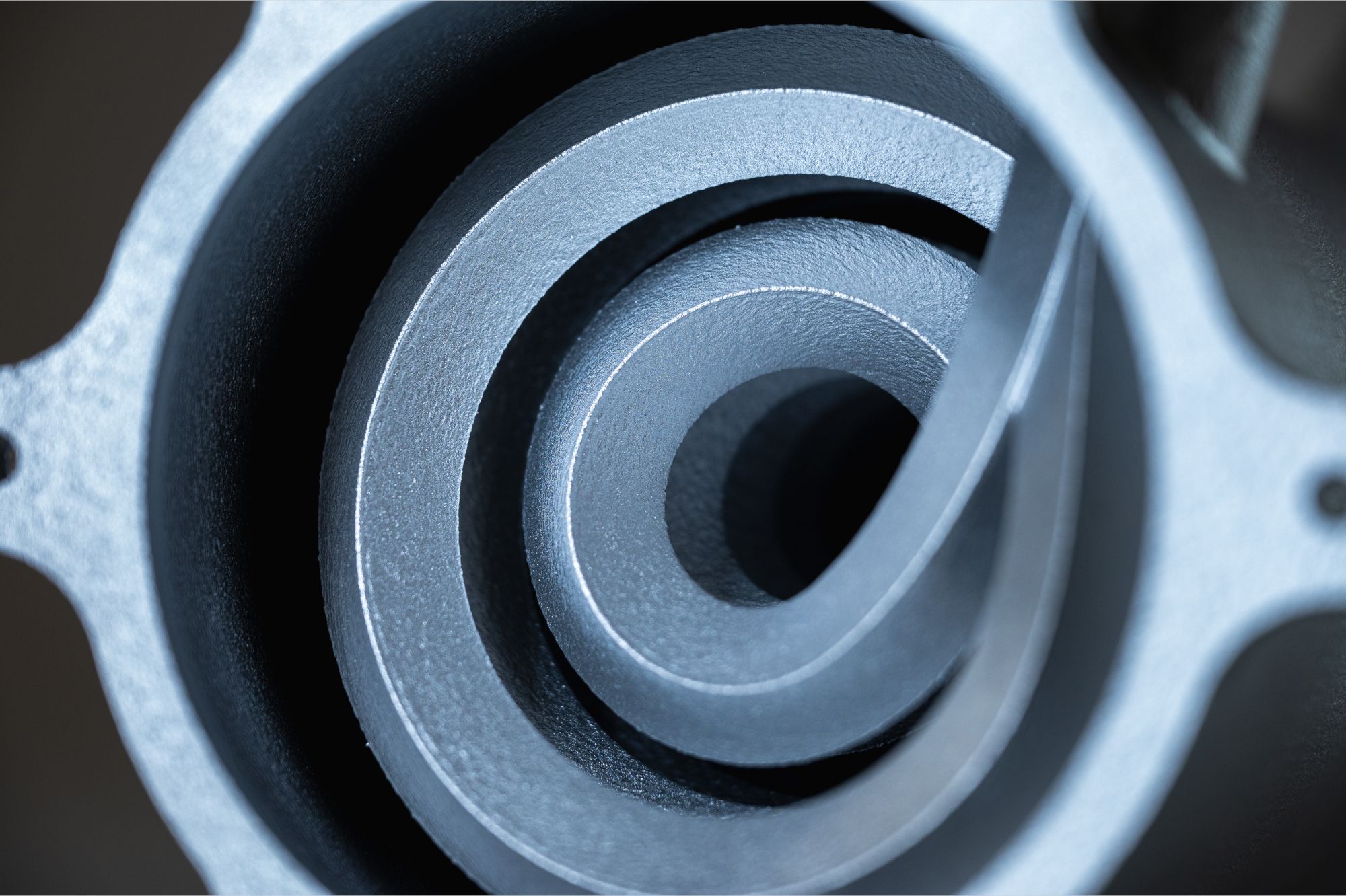
Conformal cooling channels integrated into molds, tooling or high-performance components allow heat to be dissipated more efficiently compared to straight drilled channels. Improved thermal management can reduce cycle times in injection molding, increase component lifespan and enhance process stability.
Powder Bed Fusion also enables the integration of functional features directly into the part geometry. Fluid channels, weight-saving cavities and complex internal passages can be embedded without additional assembly steps.
By consolidating multiple parts into a single component, manufacturers reduce assembly operations, potential failure points and supply chain complexity.
Material strategy and process control
Designing for Powder Bed Fusion is closely linked to material selection. Mechanical properties, thermal conductivity and corrosion resistance vary significantly across alloys such as stainless steels, aluminum alloys, nickel superalloys, titanium alloys, cobalt-chrome, and copper.
AltForm systems support a broad range of industrial metal powders. The selection of material influences design constraints, achievable wall thickness, support strategy, and heat treatment requirements.
In industrial environments, the ability to control process parameters and adapt them to new materials is critical. AltForm platforms are designed to provide engineering teams with the flexibility required for material qualification and process optimization. This enables manufacturers to move from concept validation to repeatable production workflows.
From prototyping to serial production
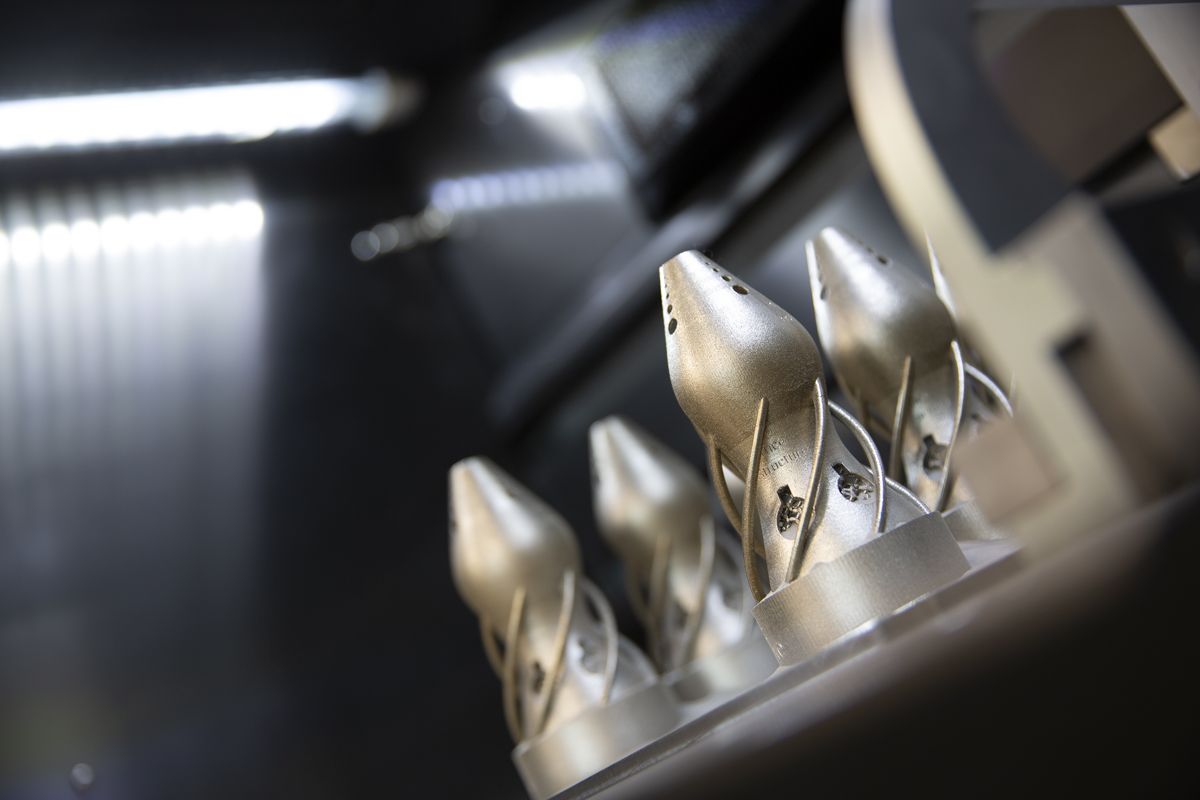
Many companies initially approach Powder Bed Fusion as a rapid prototyping tool. The transition toward serial production requires greater emphasis on repeatability, scalability and integration into existing manufacturing ecosystems.
Design decisions must consider build orientation, nesting strategies and post-processing operations. Surface finish requirements may influence geometry definition. Machining allowances must be incorporated where precision interfaces are required.
At AltForm, we support this transition by aligning design strategy with industrial deployment. Our Powder Bed Fusion platforms are developed for production environments where uptime, automation and digital connectivity are essential.
Designing for additive manufacturing therefore becomes part of a broader production strategy rather than an isolated engineering exercise.
Industrializing Design for Additive Manufacturing
The future of advanced manufacturing lies in combining additive and conventional processes in a coordinated workflow. Components can be designed to leverage the strengths of Powder Bed Fusion while integrating machining or finishing steps where required.
AltForm works with engineering teams to evaluate redesign opportunities, optimize geometries, and align material strategy with production objectives. The goal is to enable components that deliver measurable performance improvements while remaining compatible with industrial constraints.
When design, material selection, and process control are aligned, Powder Bed Fusion becomes a strategic manufacturing capability.