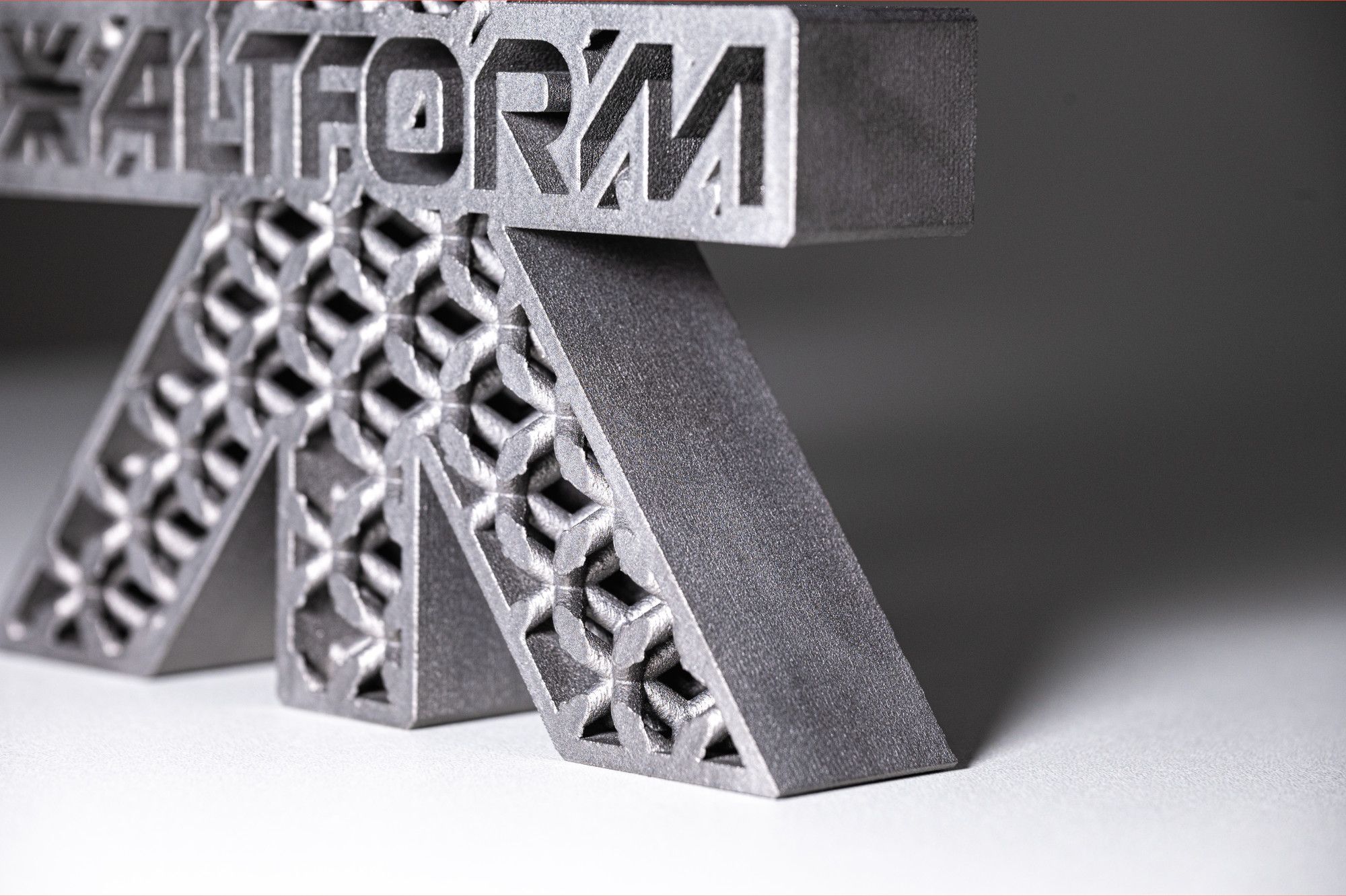
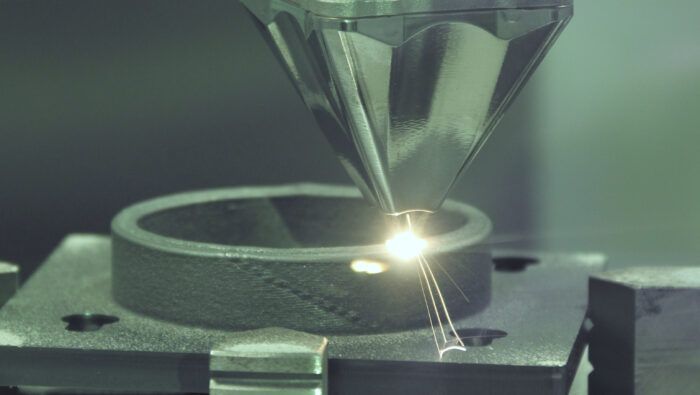
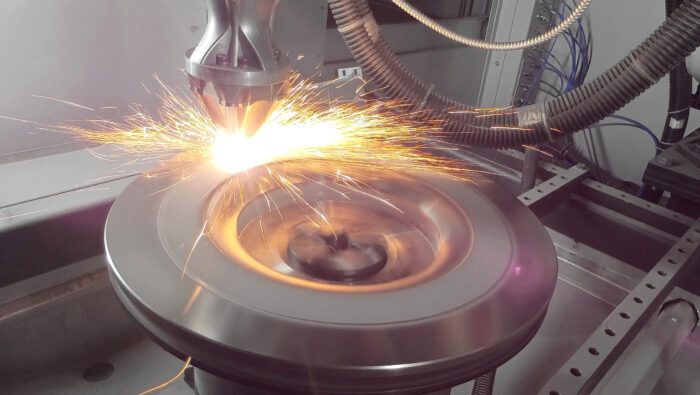
As metal additive manufacturing moves from validation projects to serial production, the discussion shifts from geometry freedom to industrial efficiency. Throughput, cost per part, and process stability become central performance indicators. In this context, multi-laser Powder Bed Fusion represents a structural solution for scaling production capacity without compromising quality.
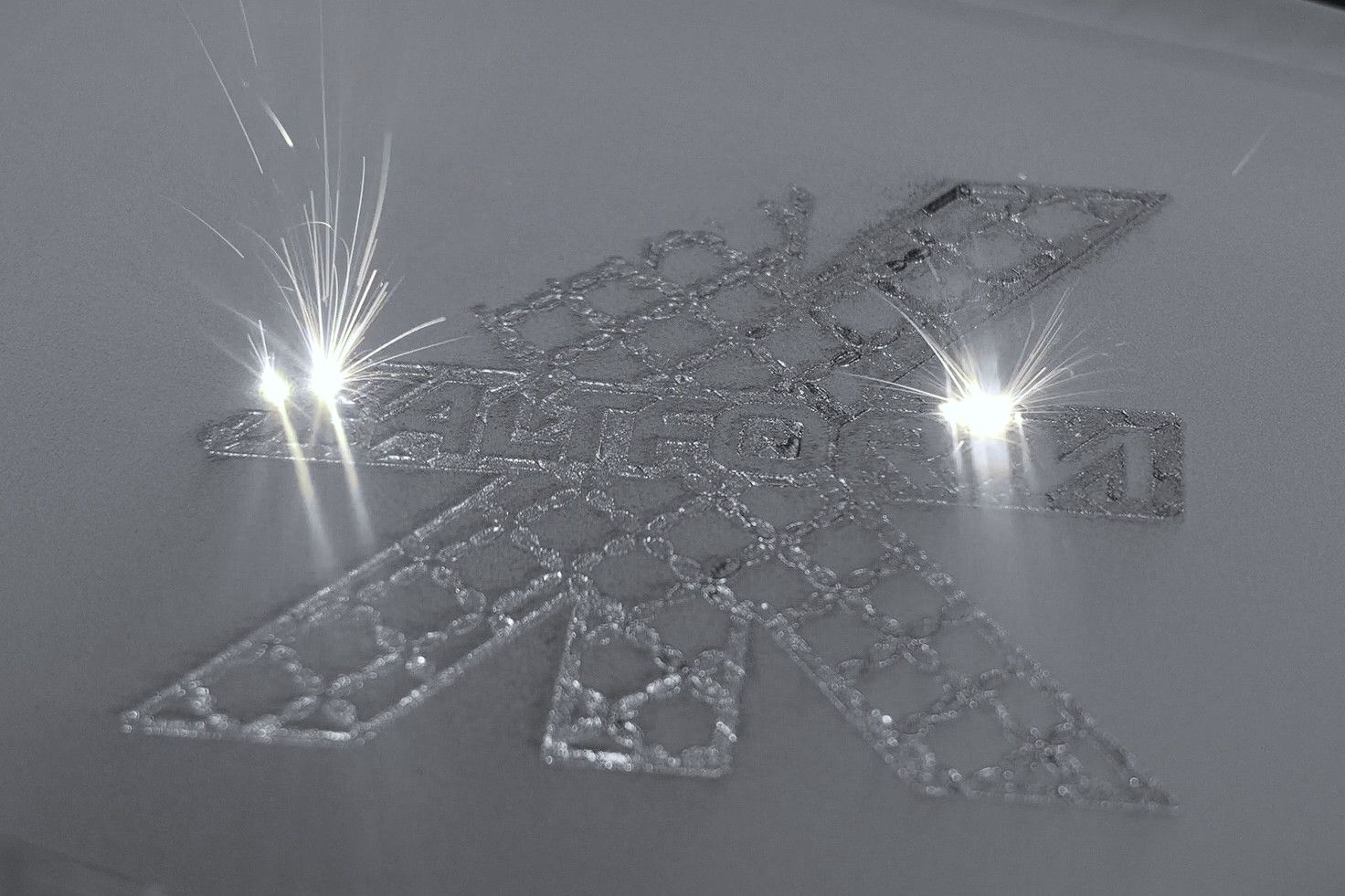
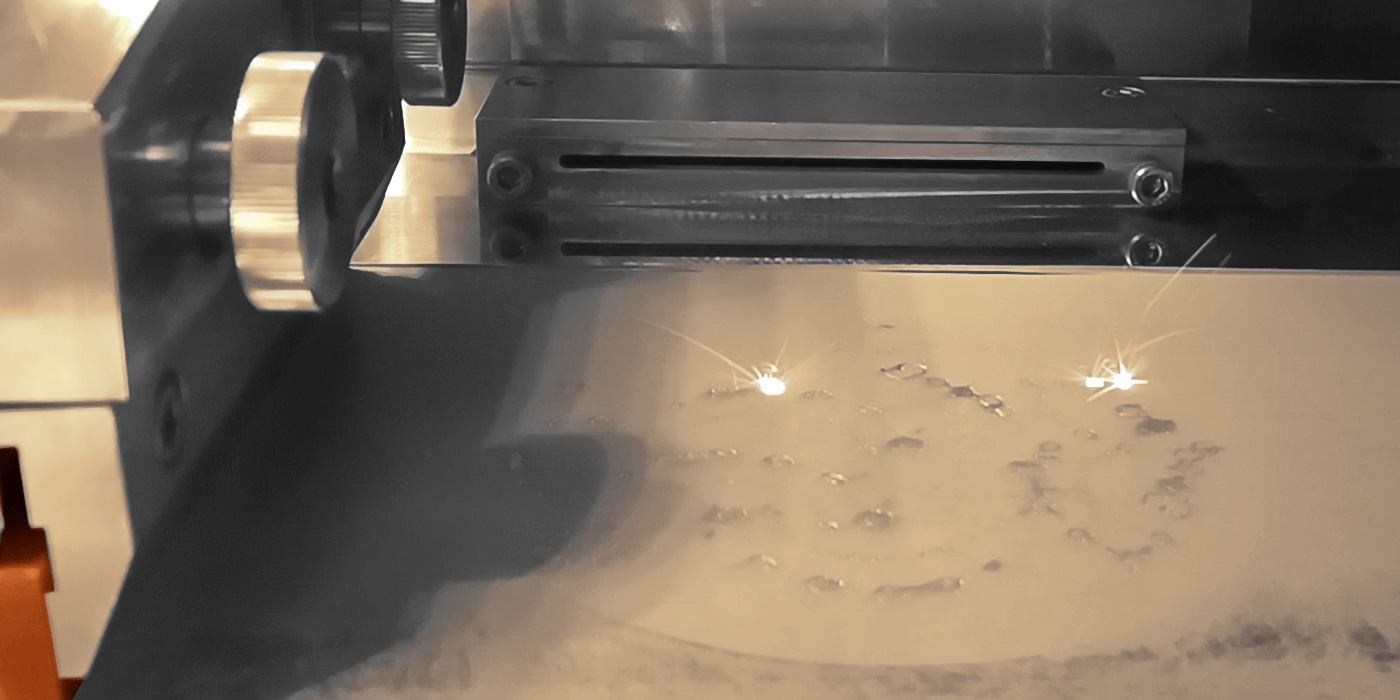
In a multi-laser system, several laser sources operate simultaneously on the same build platform. The increase in exposure capacity allows manufacturers to reduce build time while maintaining dimensional accuracy and metallurgical consistency. However, industrial multi-laser manufacturing is not defined by the number of lasers alone. It is defined by how effectively energy, motion, and thermal behavior are synchronized.
AltForm Powder Bed Fusion platforms are configurable with one, two, or four lasers, with power levels selected according to material characteristics and production targets. Every configuration is based on a full overlap architecture, meaning that each laser can operate across the entire build area. This design choice maximizes flexibility and ensures uniform process capability over the full platform.
Beyond speed: controlling thermal interaction
Increasing the number of lasers introduces new engineering challenges. When multiple laser beams operate in proximity, their thermal fields interact. Without proper control, this interaction can influence microstructure, residual stress distribution, and density.
The most critical zone in a multi-laser system is the overlap region, where exposure strategies must be carefully coordinated. Differences in energy density or scan timing can result in local inconsistencies if not managed correctly.
AltForm systems implement advanced synchronization and load management strategies to ensure uniform energy input across the build surface. Because all lasers can access the entire platform, the workload can be dynamically redistributed during the process. This approach improves machine utilization and reduces non-productive time, while preserving homogeneous mechanical properties across the part.
Industrial multi-laser architecture, therefore, requires algorithmic coordination and a deep understanding of laser-material interaction. It is a system-level engineering challenge rather than a simple hardware upgrade.
Configuring the right number of lasers
Choosing between one, two, or four lasers depends on production objectives. Part size, nesting strategy, annual volume, and economic targets all influence the decision.
A single-laser configuration may be appropriate for material development, lower production volumes, or highly specialized applications. A dual-laser system often provides a balanced solution between investment level and productivity increase. A four-laser architecture supports higher throughput requirements, particularly in environments targeting serial production.
AltForm’s experience in advanced laser technologies allows us to evaluate these variables in detail. Laser power, scanning strategy, and thermal management are analyzed together in order to define the configuration that best aligns with the customer’s manufacturing roadmap.
The objective remains consistent: increase productivity while maintaining process stability and repeatability.
Economic implications of full-overlap multi-laser systems
From an industrial standpoint, multi-laser architecture directly affects build rate and therefore cost per part. By reducing exposure time per layer and optimizing load balancing, overall production cycles are shortened.
Because AltForm systems operate under a full overlap concept, the entire build area remains available to each laser. This eliminates fixed segmentation of the platform and increases scheduling flexibility. Large parts can benefit from coordinated multi-laser exposure, while multiple smaller parts can be distributed dynamically across the platform.
The economic impact is not limited to speed. Improved machine utilization and optimized exposure planning contribute to more predictable production planning. For OEMs considering additive manufacturing as a stable production technology, this predictability is often more important than peak performance metrics.
Laser expertise as a strategic advantage
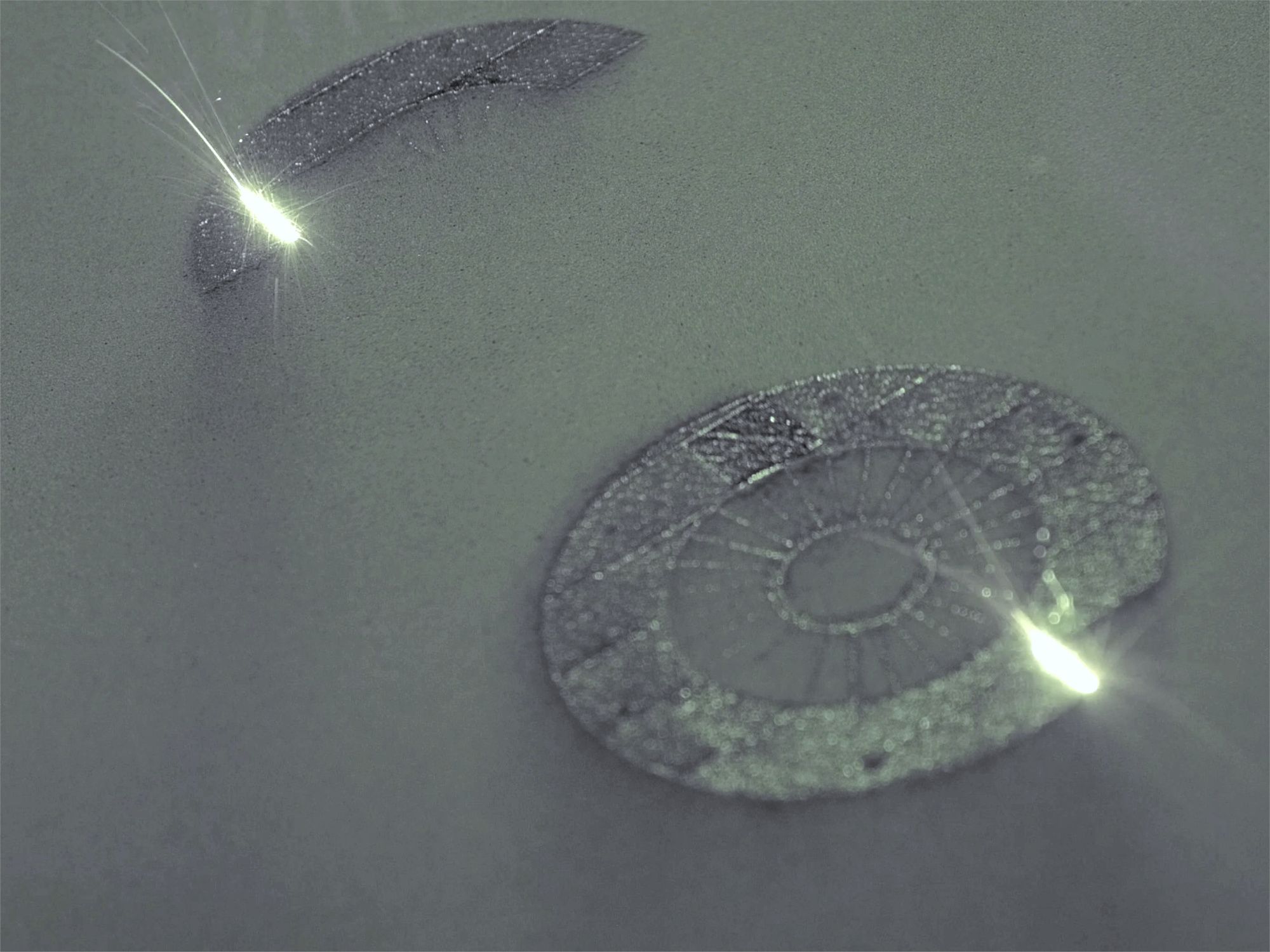
AltForm’s background in advanced laser systems extends beyond Powder Bed Fusion. Our engineering teams have long experience in integrating and optimizing laser sources for industrial material processing.
This expertise translates into:
- Careful selection of laser power levels
- Precise synchronization between beams
- Optimization of exposure sequences
- Thermal management aligned with material behavior
Multi-laser architecture requires a deep understanding of beam interaction, energy density distribution, and metallurgical response. These elements determine whether productivity gains can be achieved without introducing variability.
AltForm designs its multi-laser systems with industrial deployment as the primary objective. The result is a scalable platform capable of supporting production environments where uptime, repeatability, and integration into digital manufacturing ecosystems are essential.